
Home / Services / Hot-dip galvanising
Service · Corrosion protection
Hot-dip Galvanising of steel structures
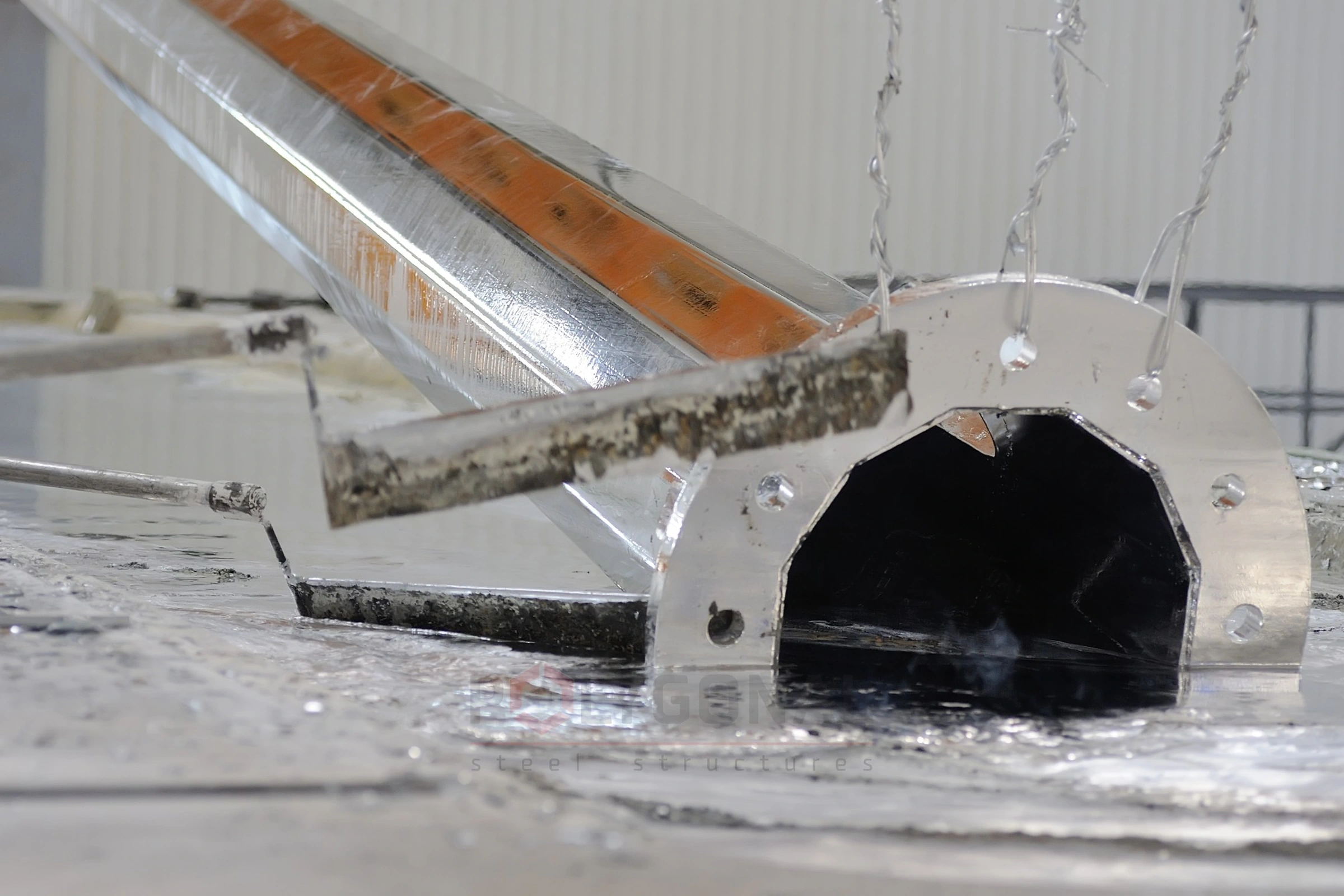
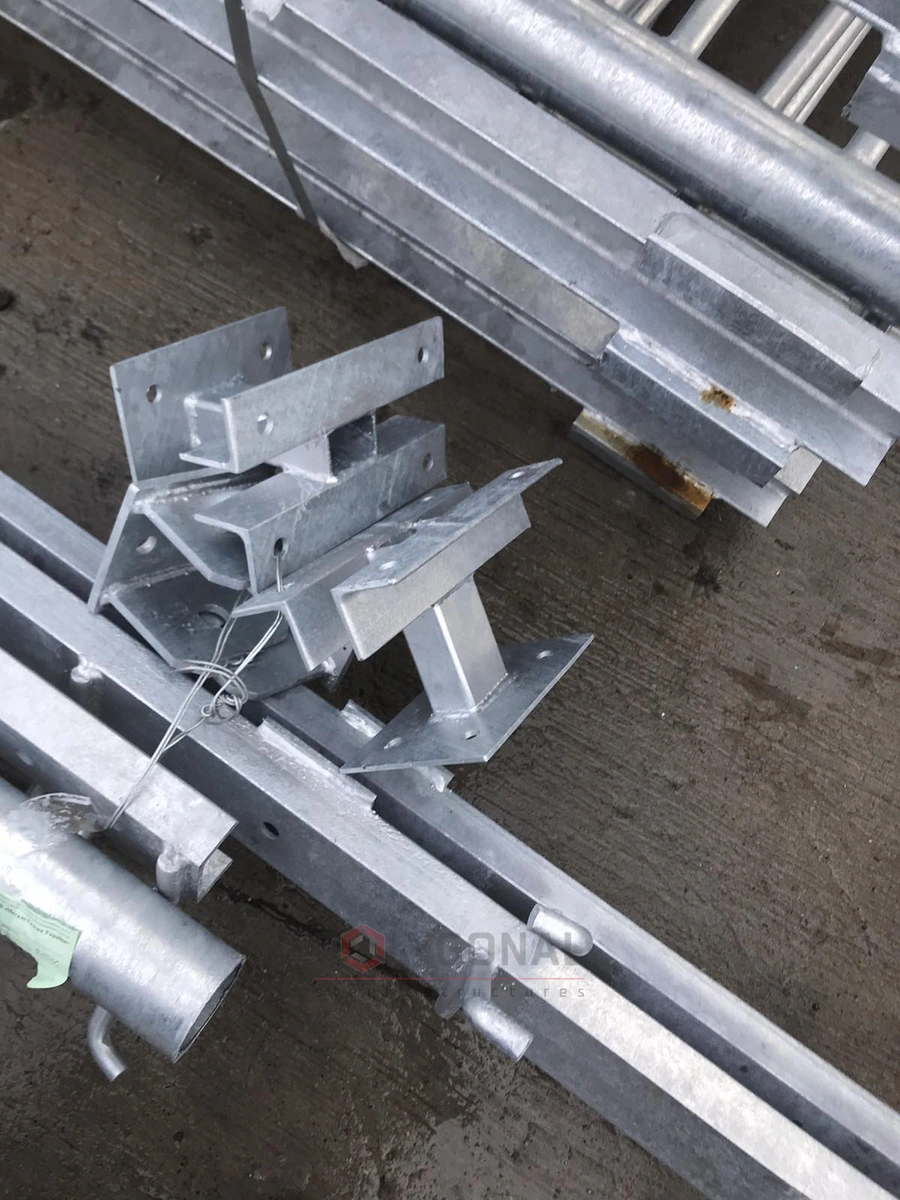
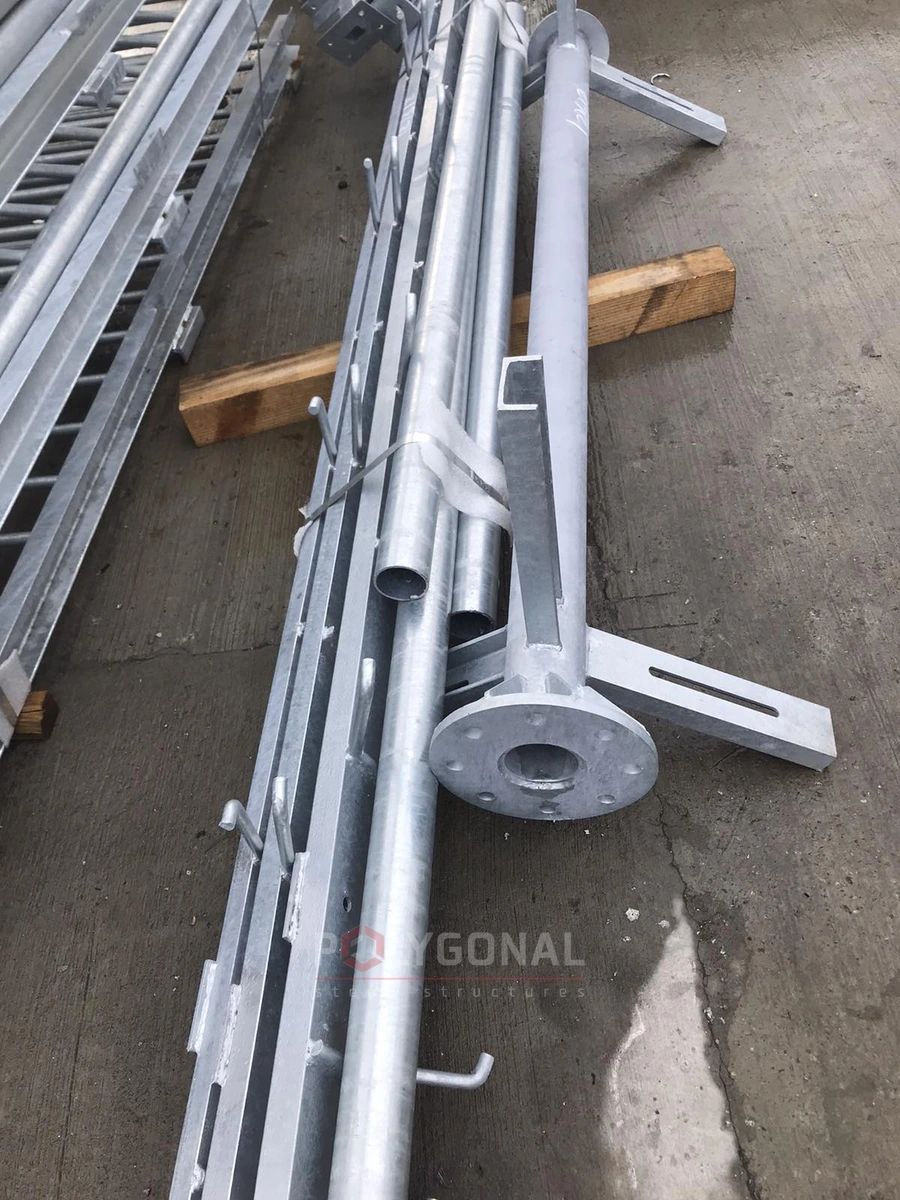
We provide hot-dip galvanising of steel structures by immersion in molten zinc. We galvanise multi-sided poles, road barriers, corrugated structures, power line poles and other products.
What we galvanise
Hot-dip galvanising is an industrial process of coating steel structures with a protective anti-corrosion layer of zinc.
Multi-sided poles
Lighting columns, masts, telecom towers and other structures made of bent multi-sided shafts.
Power line poles
Line poles, substation gantries and steel structures for power engineering.
Road barriers
Elements of road safety barriers and fences.
Corrugated and other structures
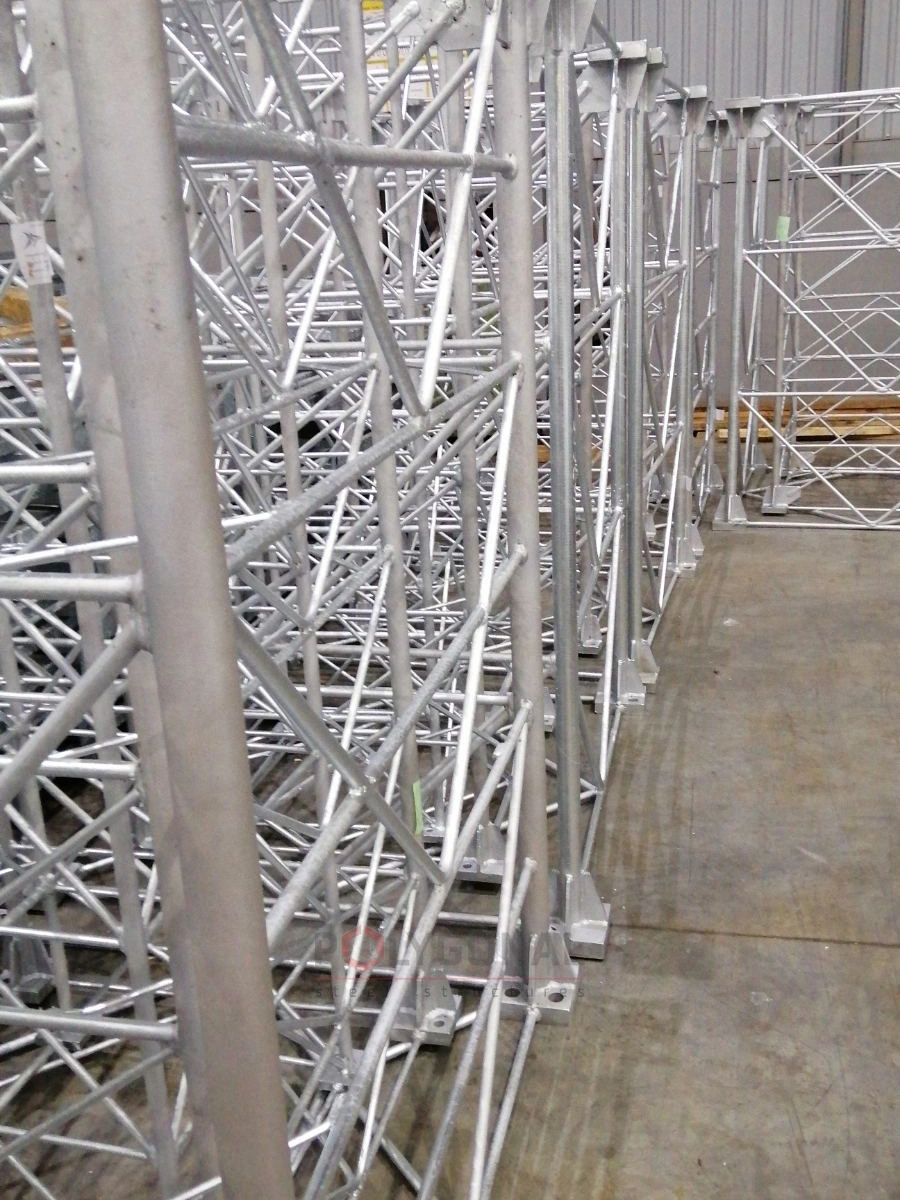
Corrugated structures and other steel products to the customer’s drawings.
Advantages of hot-dip galvanising
Reliable protection
Hot-dip galvanising by immersion is one of the most reliable methods of protecting steel from corrosion.
Protection even when damaged
Zinc gives anodic protection to steel if the zinc layer is damaged.
Coating inside the product
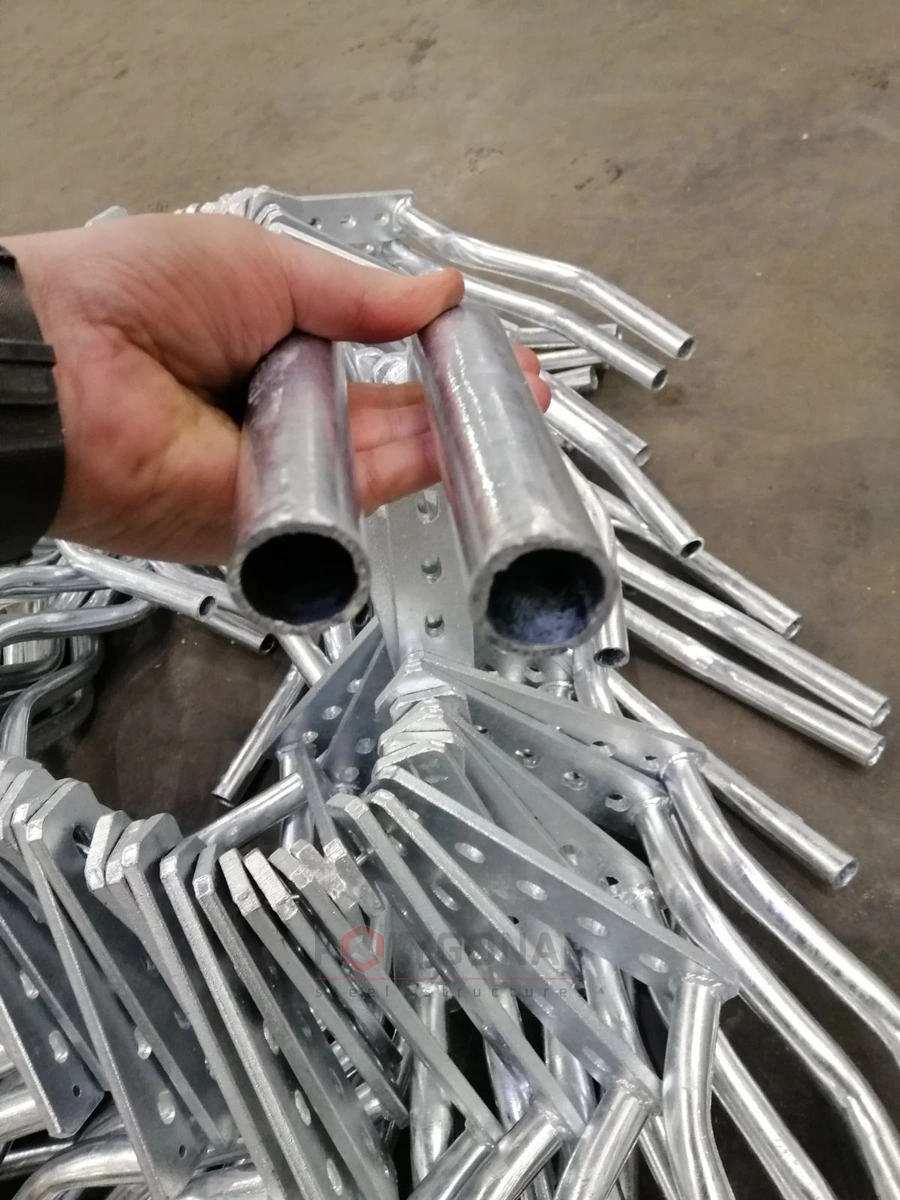
The process also forms a protective layer on the inner surface, especially of hollow and tubular products.
Longer life with paint
Adding a paint layer to the zinc coating can double its service life.
13 m galvanising bath
The galvanising bath measures 13,000 × 1,600 × 3,200 mm (length × width × depth).
No minimum order
There is no minimum order requirement for galvanising.
Immersion hot-dip galvanizing
DSTU EN ISO 1461:2024
Galvanising at the plant
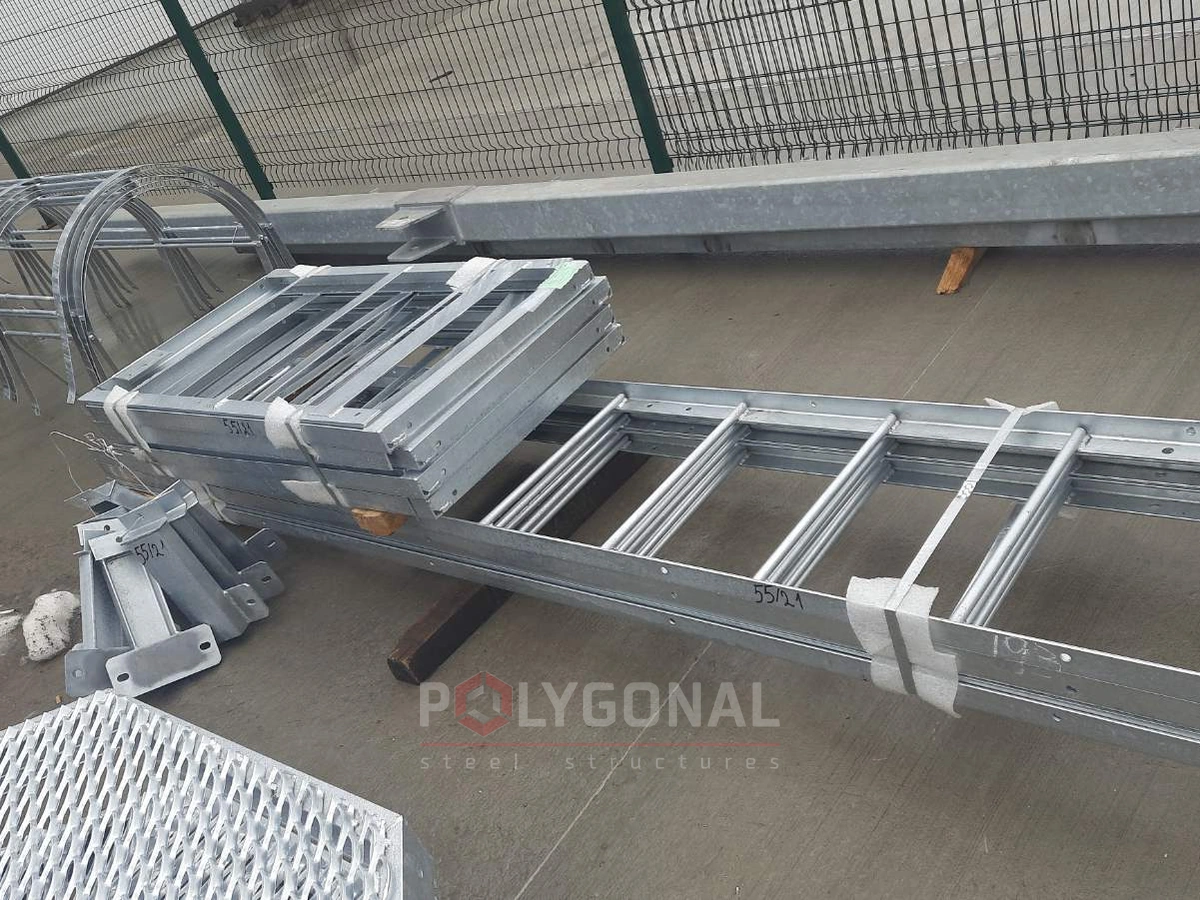
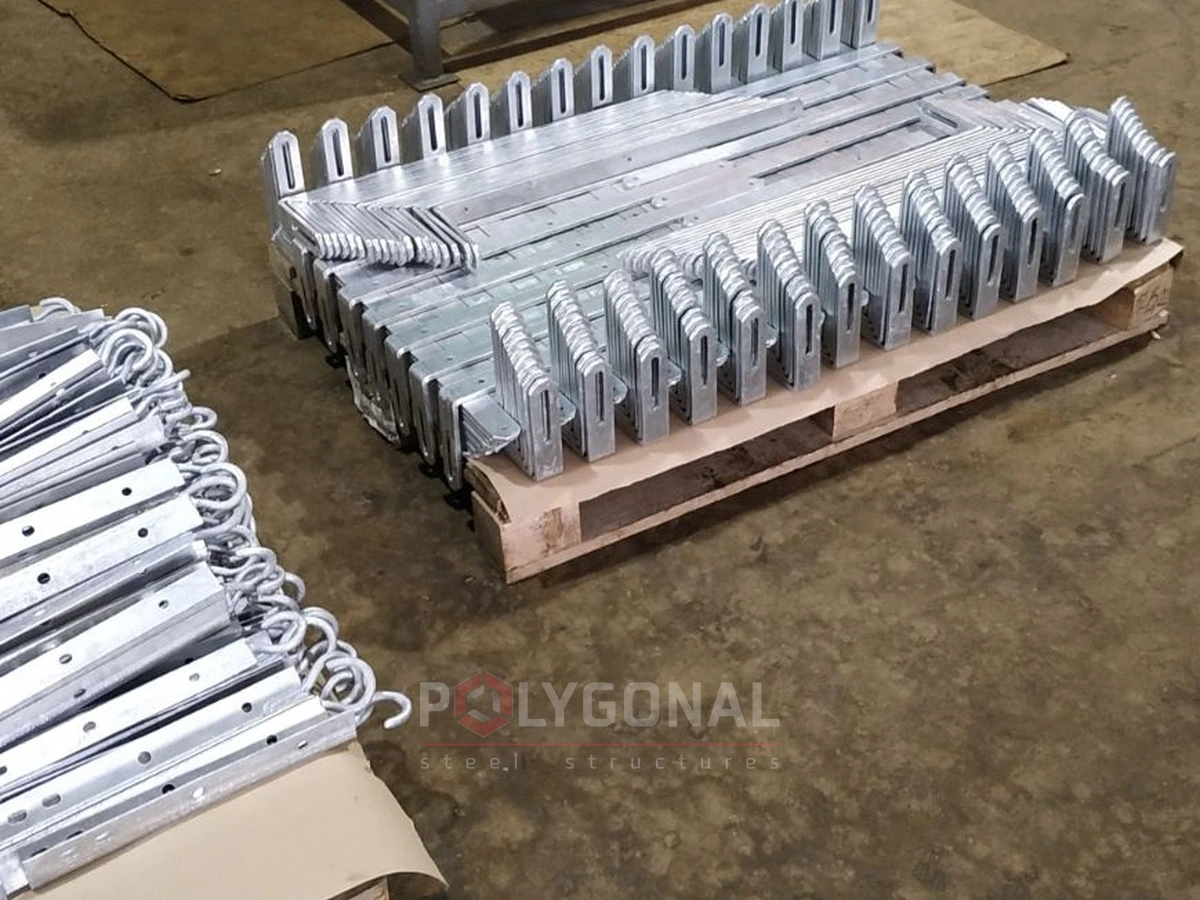
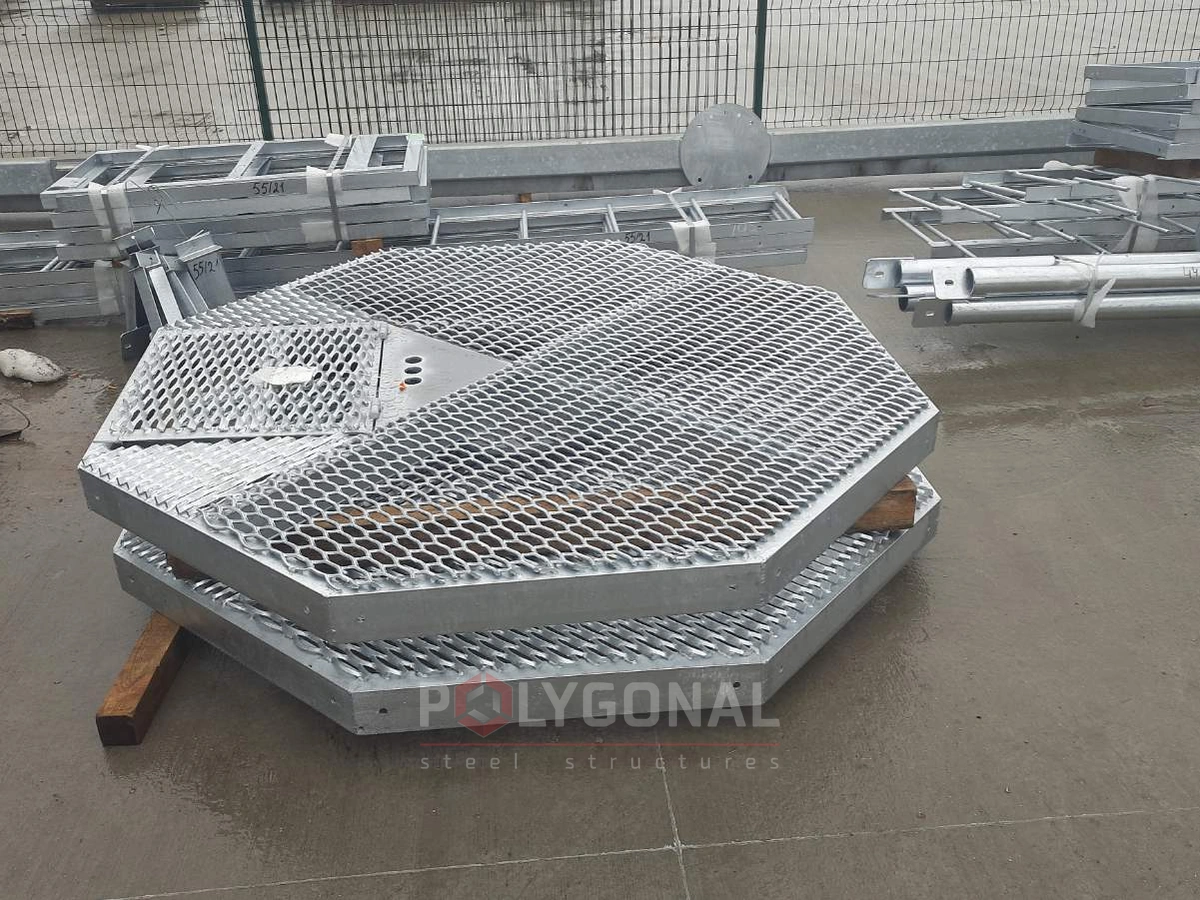
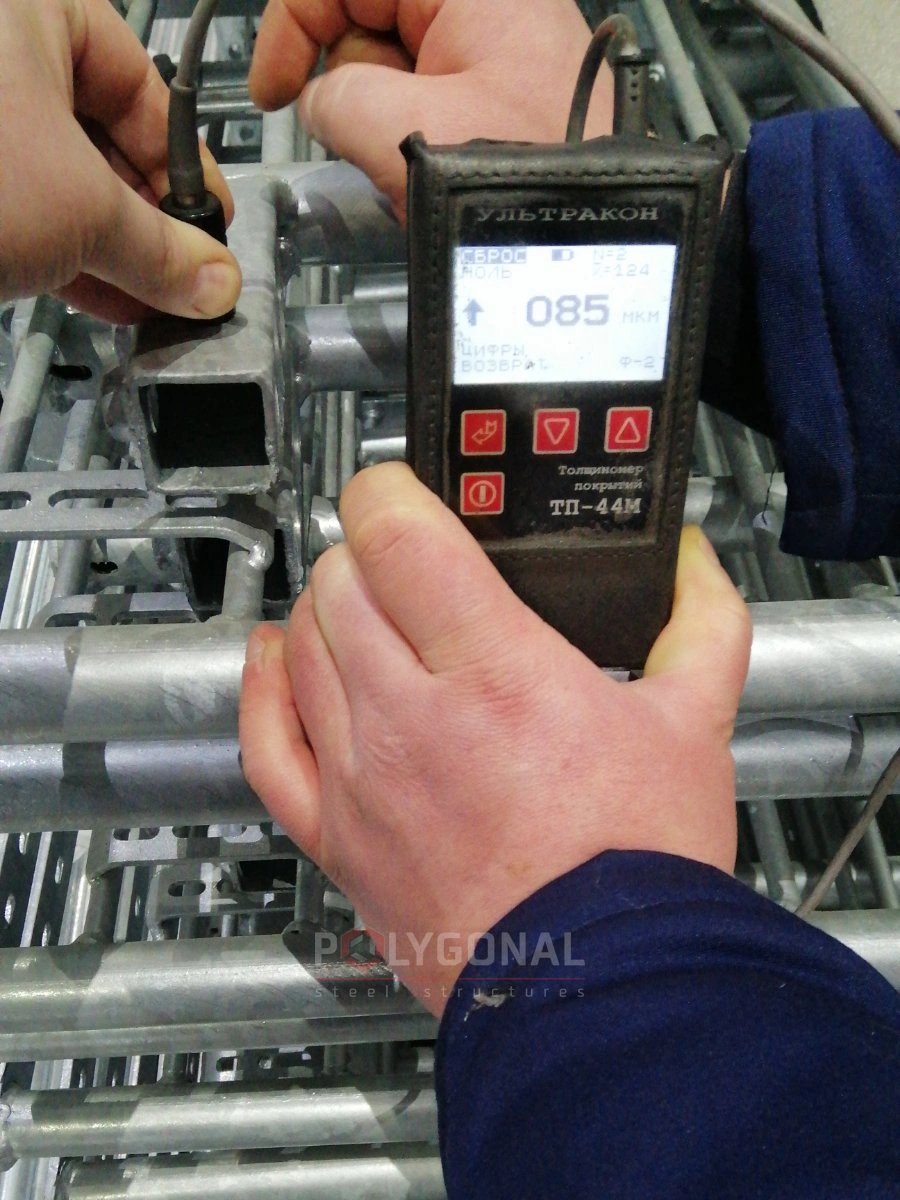
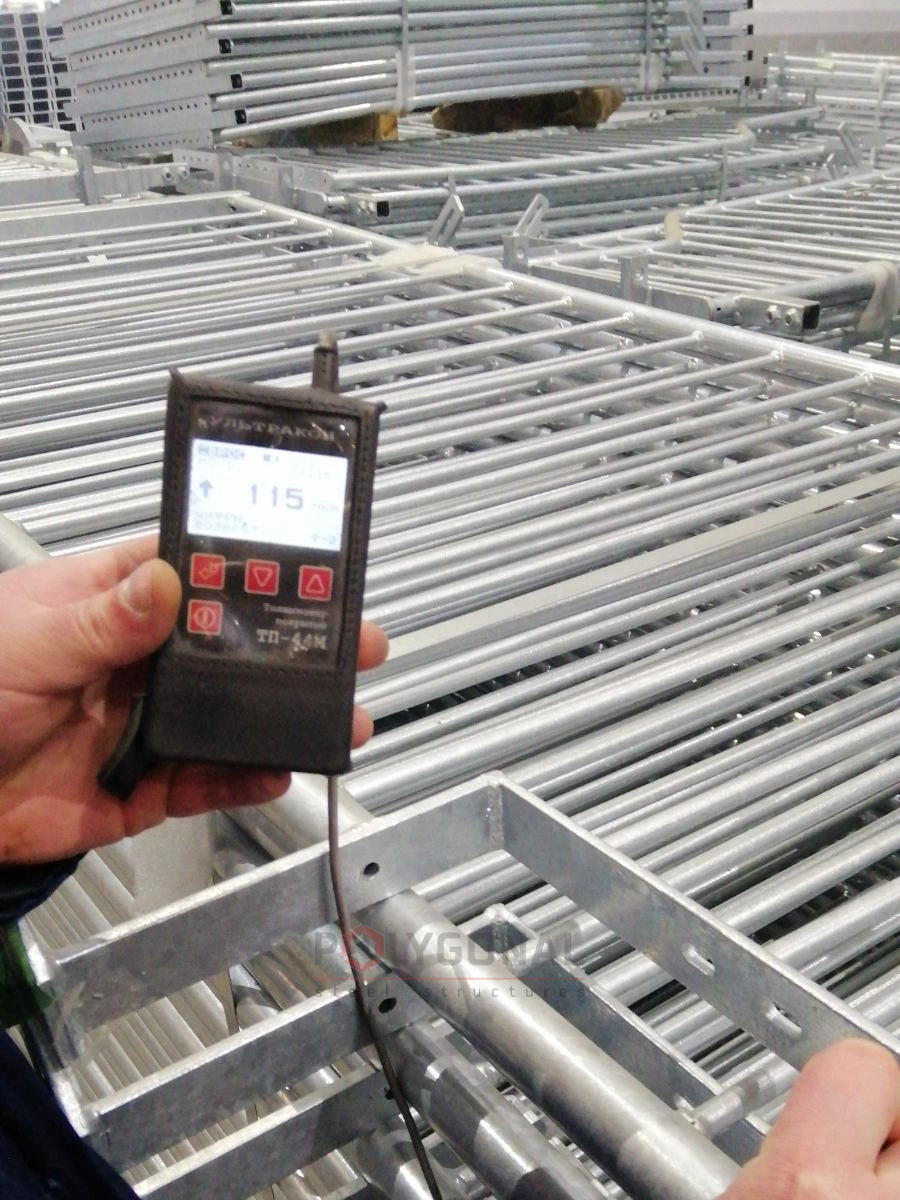
Galvanising quality control
Hot-dip galvanising: technical specifications
How hot-dip galvanising works
A pre-treated steel product is dipped into a bath of molten zinc at a temperature of about 450 °C.
During immersion zinc diffuses with iron to form Fe-Zn alloys, and pure zinc remains on the surface.
The zinc coating protects electrochemically (cathodic protection).
Coating thickness
Hot-dip galvanising is carried out to DSTU EN ISO 1461:2024.
For lighting columns the average coating thickness is at least 55 µm (3 mm wall) or 70 µm (4 mm wall) per ISO 1461.
For floodlight masts the coating thickness is 80–120 µm.
Galvanising and painting
When a product operates in special conditions, a layer of paint is applied over the zinc coating. Such a system (duplex) can double the service life of the coating.
Galvanising cost calculator
An approximate cost by batch mass (20–38 UAH/kg incl. VAT) and a check of dimensions against the 13,000 × 1,600 × 3,200 mm bath can be made in the hot-dip galvanising cost calculator. There is no minimum order.
Engineering of galvanising plants
POLYGONAL also designs and commissions hot-dip galvanising plants: lines based on gas and electric furnaces with a steel bath, flux regeneration units and zinc ash recycling units.
Stages of the hot-dip galvanising process
Products are hung on traverses and pass through consecutive operations:
- degreasing and pickling: removal of grease and iron oxides;
- rinsing and fluxing: preparing the surface for the reaction with zinc;
- drying: reduces thermal shock on immersion;
- galvanising by immersion in molten zinc at about 450 °C;
- cooling, passivation and inspection of coating thickness and appearance.
Requirements for products to be galvanised
- Structures must have no closed cavities or air pockets: all cavities must be open for liquids, molten zinc and gases to enter and leave.
- The surface must be free of scale, burrs, welding slag, grease and marking paint.
- Welds must be continuous and dense; lap joints cannot be galvanised.
- Product length and size are limited by the bath size. Longer products such as poles are galvanised in sections.
What determines the price of galvanising
The price depends on the weight of the products, their dimensions and complexity, batch size and surface preparation. Send the list of products and we will calculate the price and lead time.
How to order hot-dip galvanising
- Send the list of products with dimensions, weight and quantity, and drawings or photos.
- We check that the products are suitable for galvanising and tell you the preparation requirements.
- We calculate the price and lead time; after approval we accept the products for galvanising.
Articles about hot-dip galvanising
Hot-dip Galvanising Process: Steps and Requirements
Hot-dip Galvanising Defects: Causes and Prevention
Zinc Coating Thickness under DSTU EN ISO 1461:2024
Zinc Coating Defects: Runs, Grey Coating, Detachment and Black Spots
Hot-dip, Electro- or Cold Galvanising: Which to Choose
How to Prepare a Steel Structure for Hot-dip Galvanising: Checklist
Designing Steel Structures for Hot-dip Galvanising: Holes, Welds, Stress
Hot-dip Galvanising Cost Calculator: Mass, Dimensions, Price Range
Hot-dip Galvanising Service Life
Hot-dip Galvanising Cost: What the Price per Kg and Tonne Depends On
Hot-dip Galvanising: Price and Delivery to Kyiv
Hot-dip galvanising: frequently asked questions
What is hot-dip galvanising?
Applying a protective zinc layer by dipping a prepared steel product into molten zinc (about 450 °C). Zinc diffuses with iron to form Fe-Zn alloys, and pure zinc remains on the surface.
How thick is the zinc coating?
For lighting columns on average at least 55 µm (3 mm wall) or 70 µm (4 mm wall) per ISO 1461, for floodlight masts 80–120 µm. The thickness depends on the product and the customer’s requirements.
Is the inside of tubes galvanised?
Yes. The process also forms a protective layer on the inner surface, especially of hollow and tubular products.
Can the zinc coating be painted over?
Yes. A paint layer over the zinc coating (duplex) can double its service life.
What do I need to send for a price calculation?
A list of products with their dimensions, weight and quantity, and drawings or photos. We will calculate the price and the lead time.
What size of products can be galvanised?
The galvanising bath is 13,000 × 1,600 × 3,200 mm (length × width × depth). It limits the size of a product; longer items such as poles are galvanised in sections.
Is there a minimum order for galvanising?
There is no minimum order requirement.
Do you design galvanising plants?
Yes. We carry out a site survey, advise on equipment selection, deliver a full plant design, supervise installation, start up the plant and train the staff.
Why is hot-dip galvanising better than painting?
Zinc protects steel even when the coating is damaged (anodic protection) and coats the inner surface of hollow products, which paint cannot do. For special conditions a paint layer can be added over the zinc (duplex).
Which products cannot be galvanised?
Products with closed cavities, without holes for zinc and gases to enter and leave, and with lap-welded joints. If in doubt, send the drawing and we will check.
Can you galvanise products made elsewhere?
Yes. Send the list of products with dimensions and weight and we will assess suitability for galvanising and calculate the price.
Hot-dip galvanising: related solutions
Street lighting columns
Hot-dip galvanising of lighting columns.
High-mast lighting
Hot-dip galvanising of floodlight masts.
Overhead power line masts
Hot-dip galvanising of power line poles and substation gantries.
Telecom masts
Hot-dip galvanising of telecom towers and antenna masts.
Hot-dip galvanising line
Production equipment: cutting and welding lines, presses.
Steel structure design (structural and detail drawings)
Structural and detail drawings for your structures.
Custom steel fabrication
Fabrication of steel structures to drawings: cutting, bending, welding.
Powder coating of steel structures
Powder coating of steel structures and duplex systems with zinc.
Need your steel structures galvanised?
Send us the list of products, their dimensions and weight. We will calculate the price and the lead time.