
Home / Services / Hot-dip galvanising / Hot-dip Galvanising Defects: Causes and Prevention
Hot-dip galvanising
Hot-dip Galvanising Defects: Causes and Prevention
A reference on zinc coating defects: how a good coating forms, how to recognise each defect, why it occurs and how to avoid it.
Contents
How the zinc coating forms
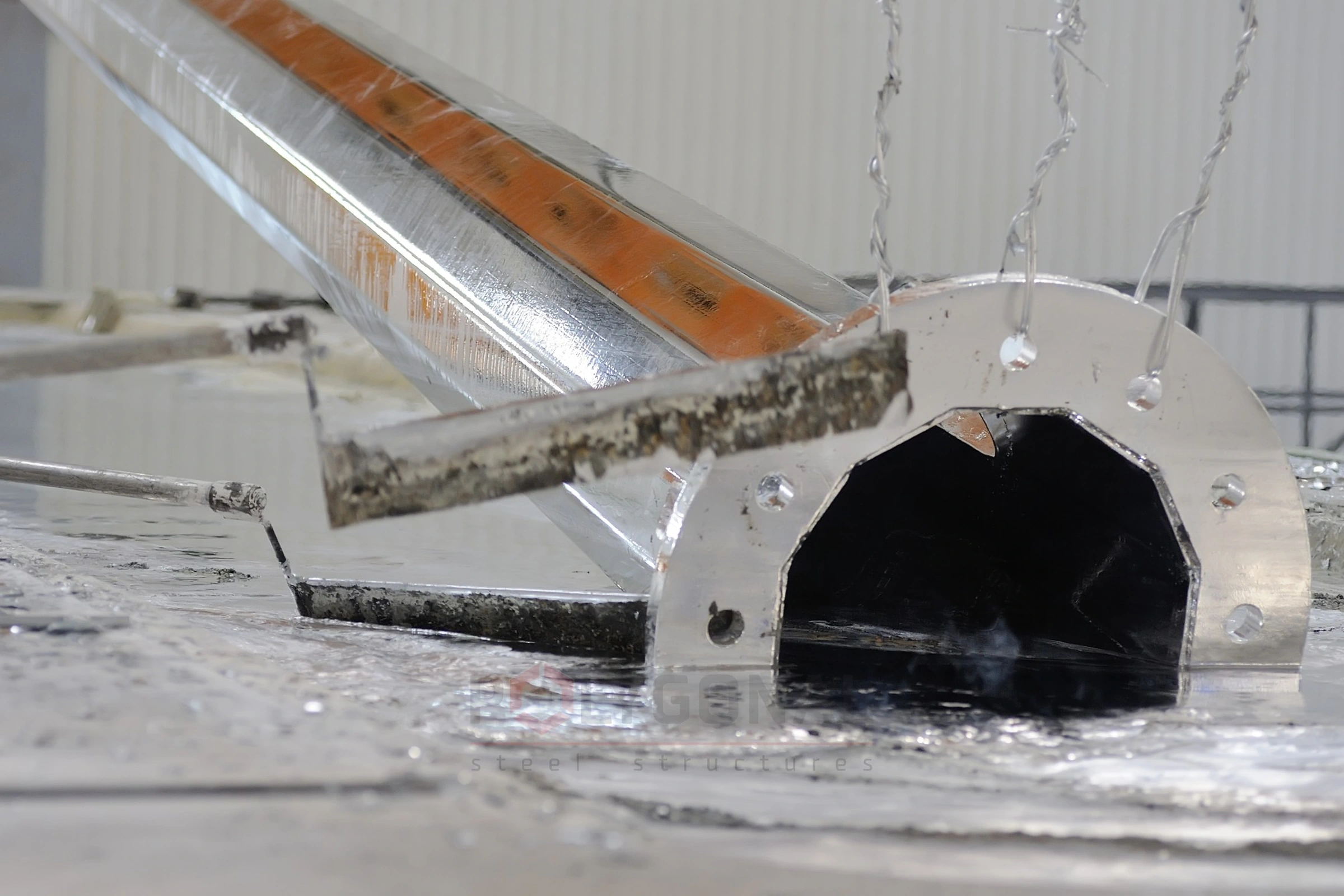
Flawless galvanising is the immersion of finished parts with no defects into molten zinc. A layer of iron-zinc alloy forms on the steel or cast iron surface, with a layer of zinc on top. When thick-walled articles or steels that react quickly with the melt are galvanised, the coating consists only of the iron-zinc alloy layer. In a bath containing aluminium this layer is suppressed and the coating consists only of the outer zinc layer.
During immersion in zinc a thick iron-zinc alloy layer usually forms on the surface. When the article is withdrawn, a thin layer of molten zinc lies over the alloy and solidifies as the article cools. The alloy keeps growing meanwhile. On articles with high heat capacity the outer zinc layer can disappear completely, leaving a coating of only iron-zinc alloy. In steels with a silicon content of 0.03–0.12% and above 0.2%, a loose layer instead of a dense one may form and grows quickly with immersion time.
When galvanising in a melt containing about 0.07% aluminium, the formation of the iron-zinc layer is slowed: instead of the usual layers, very thin layers of aluminium compounds with iron and zinc form. Such coatings are much thinner and consist mostly of the outer zinc layer.
After galvanising the surface is glossy, with a solidification pattern like fern leaves visible on it. Areas with higher heat capacity turn grey through growth of the iron-zinc layer. In steels with a critical silicon content (0.03–0.12%) grey coating is common: they react very quickly with zinc.
Defects of the base material and the structure
Cracks present before galvanising
Signs: cracks that were in the metal before galvanising become visible only afterwards; they are not fully filled with iron-zinc compounds and their side surfaces are covered with scale. Most often these are quench cracks.
How to avoid: articles with cracks should be rejected before galvanising.
Embrittlement from strain ageing
Signs: the mechanical properties of the article change under heat; the part becomes brittle and can break under load without deforming, especially at low temperature.
Causes: cold working (mechanical ageing) or rapid cooling (quenching). It occurs only in parts made of rimmed steel; with killed steel the danger is practically ruled out.
Embrittlement from internal stresses
Signs: cracks along the surface of the part, filled with zinc and iron-zinc alloy; visible to the naked eye.
Causes: tensile internal stresses exceed a certain level and were not relieved before galvanising; liquid zinc penetrates along the grain boundaries and causes cracking.
How to avoid: reduce internal stresses before galvanising.
Distortion and warping
Signs: change in the shape and dimensions of the article during galvanising; severe distortion can lead to cracks.
Causes: residual stresses, and also incorrect immersion of the article in the bath. It is recommended to immerse the article as fast as possible.
Mesh-like cracks
Signs: cracks running from the base metal to the surface in a mesh pattern; they occur only in sections of cold-rolled thin-walled steels containing silicon.
How to avoid: such steels should be annealed before galvanising to relieve internal stresses.
Rough coating
Signs: a coarse coating surface, uniform over a large area or local in limited areas.
Causes: roughness of the article’s surface (it increases after galvanising), uneven growth of the iron-zinc layer, uneven drainage of zinc, critical silicon and phosphorus content in places. In some cases annealing the steel surface helps.
Striped (wavy) coating
Signs: parallel thin or thick stripes of different length and width, always along the rolling direction.
Causes: interaction of the crystal structure of the surface layer with the melt and the chemical composition of the layers; local damage or cold working of the surface. The causes are not fully clear; annealing sometimes helps.
Scaly lamination
Signs: flat laminations on the surface of the rolled steel, which become more visible after galvanising (tongues, stripes, dots).
Causes: the defect arises during rolling; in galvanising, zinc penetrates between the lamination and the base metal and lifts it.
How to avoid: the defect is removed mechanically before galvanising; small laminations can sometimes be removed by annealing.
Burrs and slivers
Signs: thin, mostly long particles squeezed out of the article or attached to it during welding, engraving, stamping or milling; more visible after galvanising.
Causes: during pickling the slivers fall off and float in the galvanising bath, attaching to articles.
How to avoid: swarf is removed mechanically before galvanising; loose swarf can sometimes be removed by quick pickling or annealing.
Burning-on when galvanising cast iron
Signs: a coarse, rough, uneven coating, sometimes with black dots; swelling may form on the edges.
Causes: oxidation of cast iron articles during quenching carried out before galvanising; small oxidised particles impair the process.
Hot-dip galvanising defects
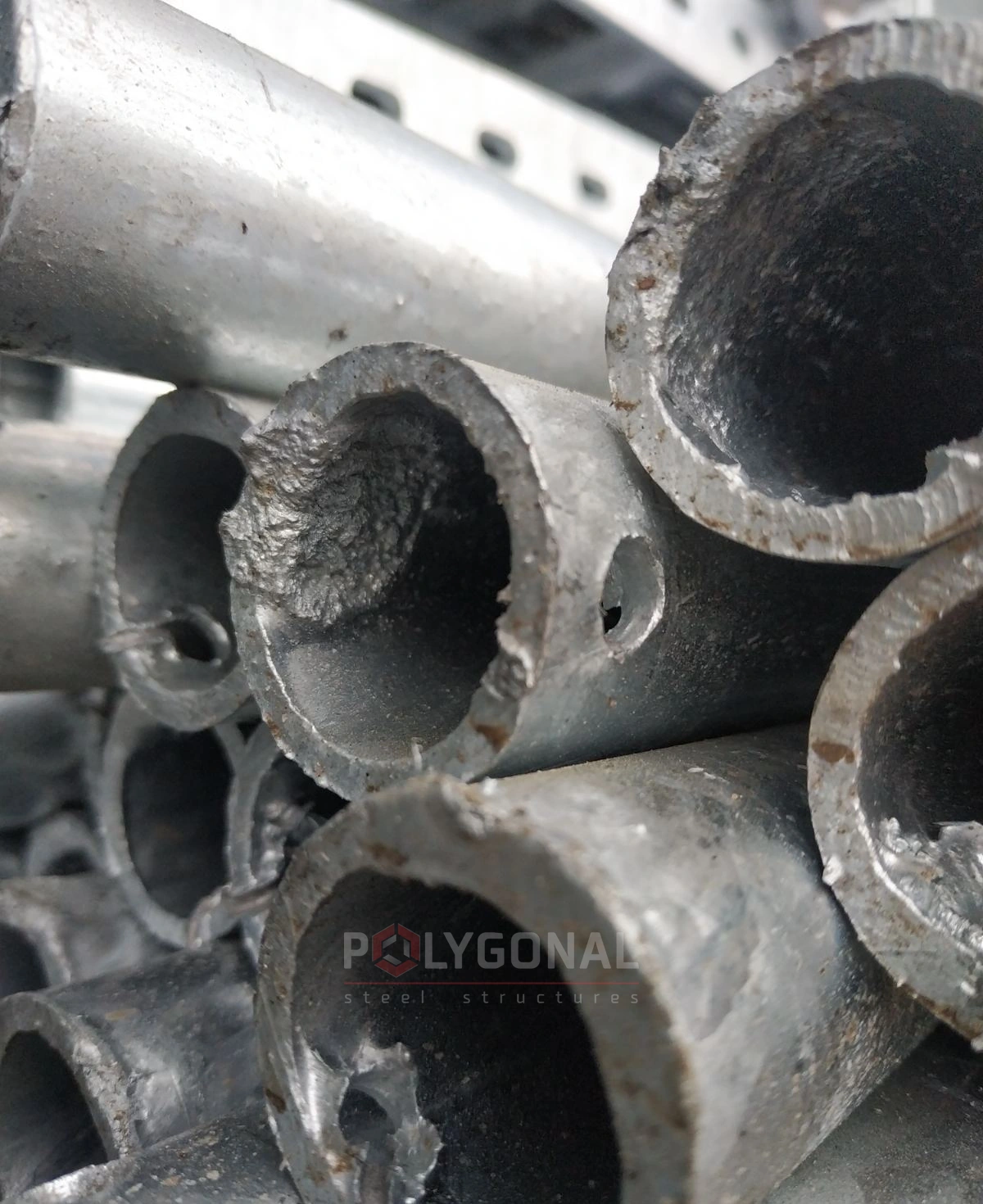
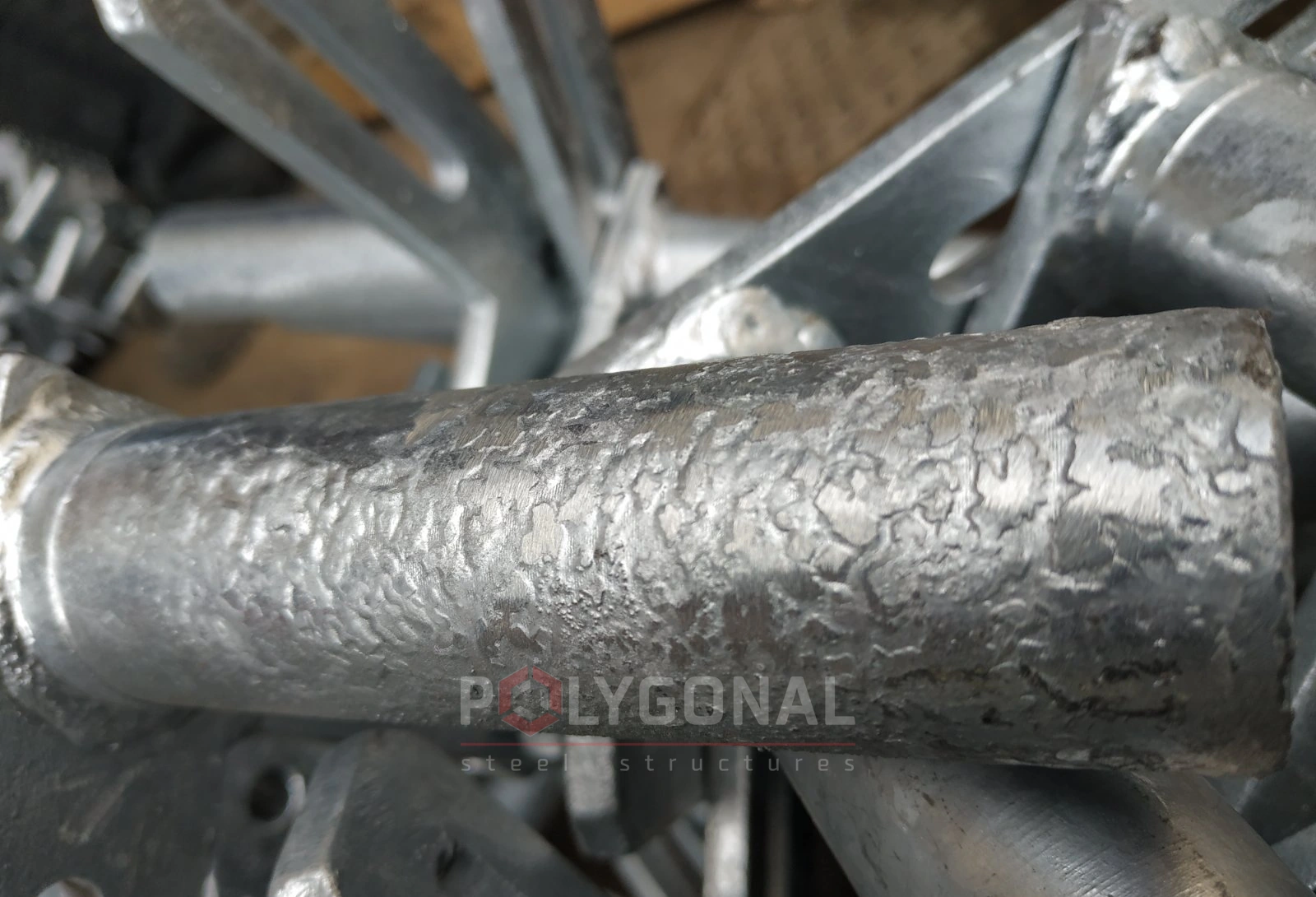
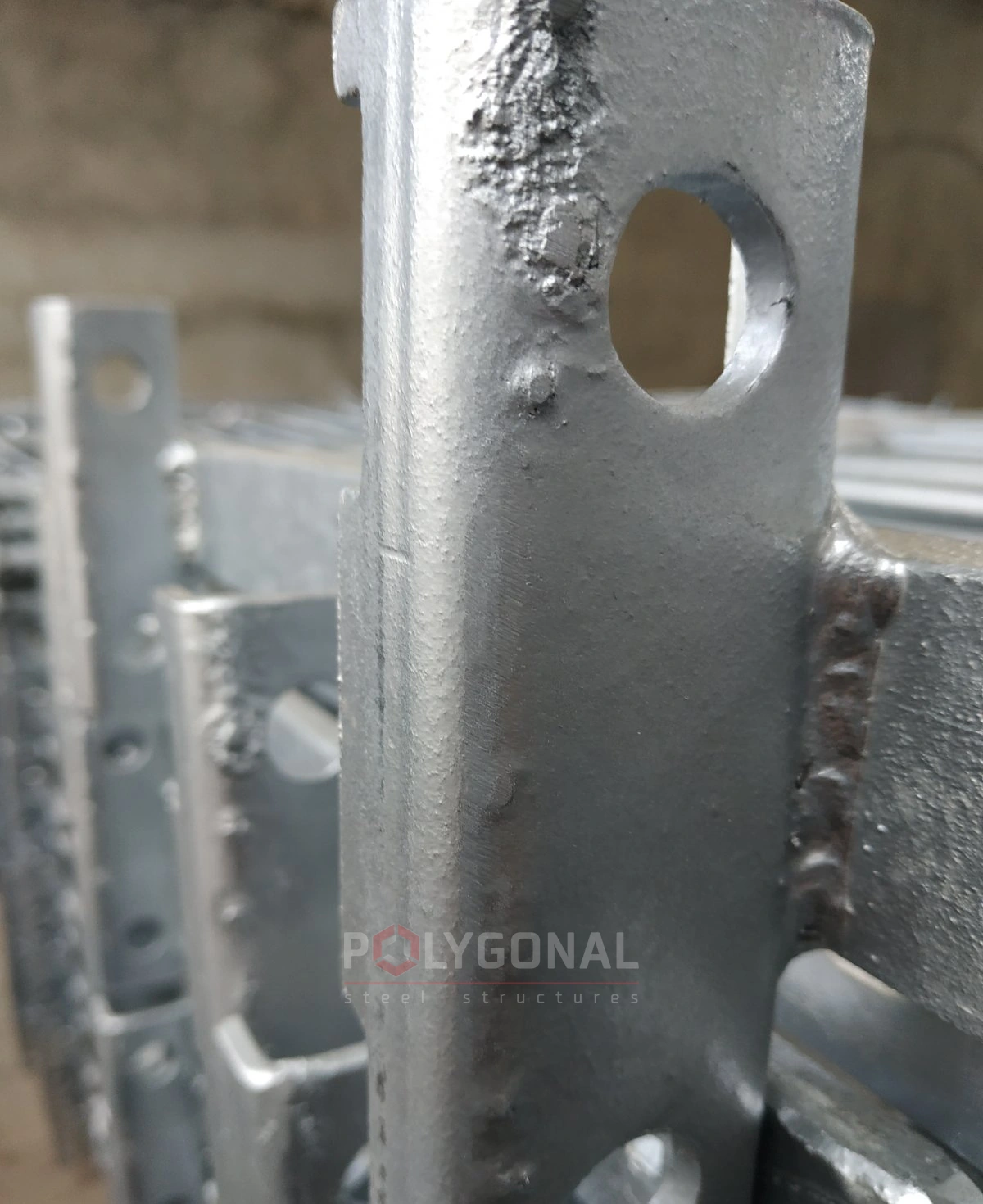
Defects of surface preparation and the bath
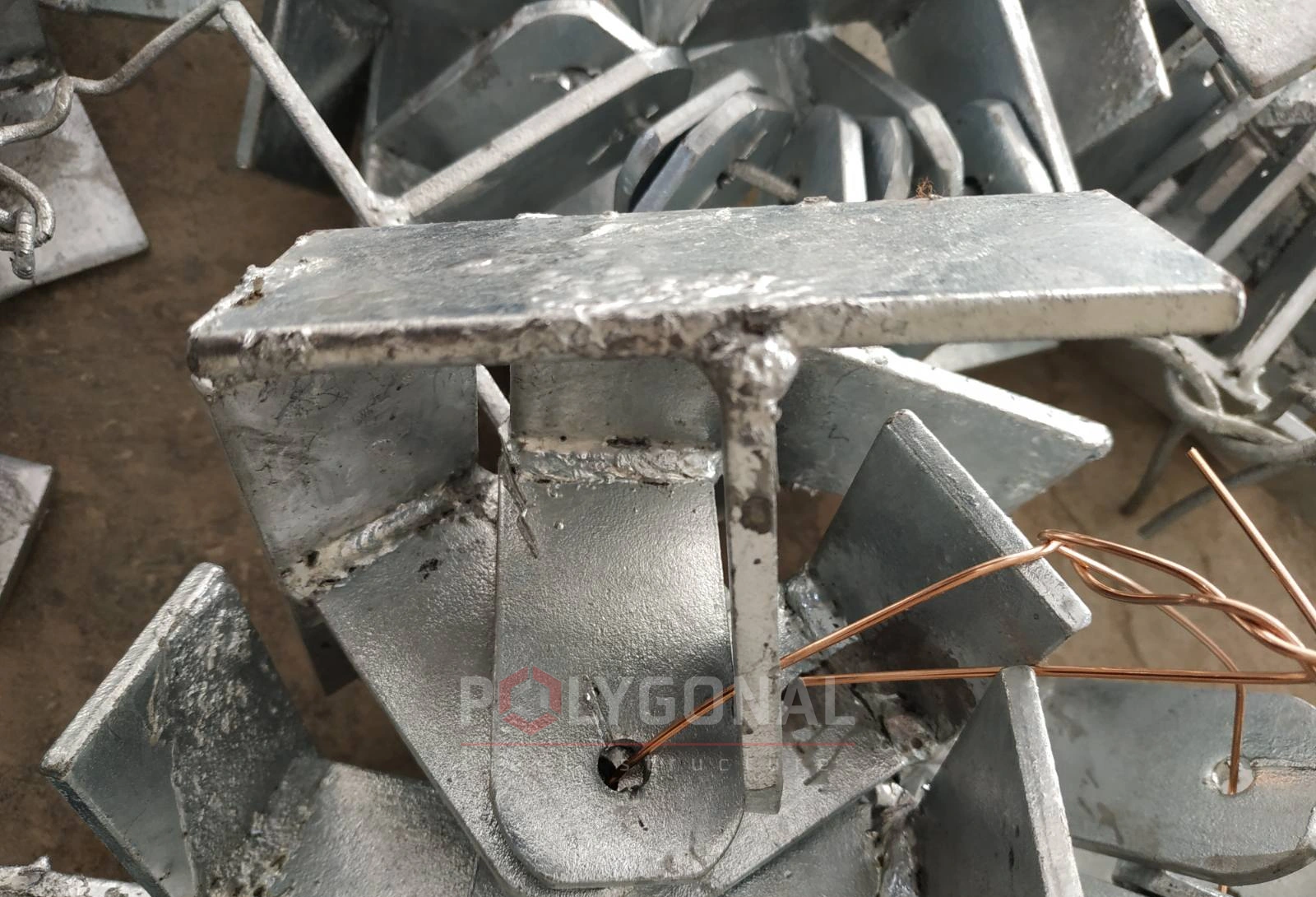
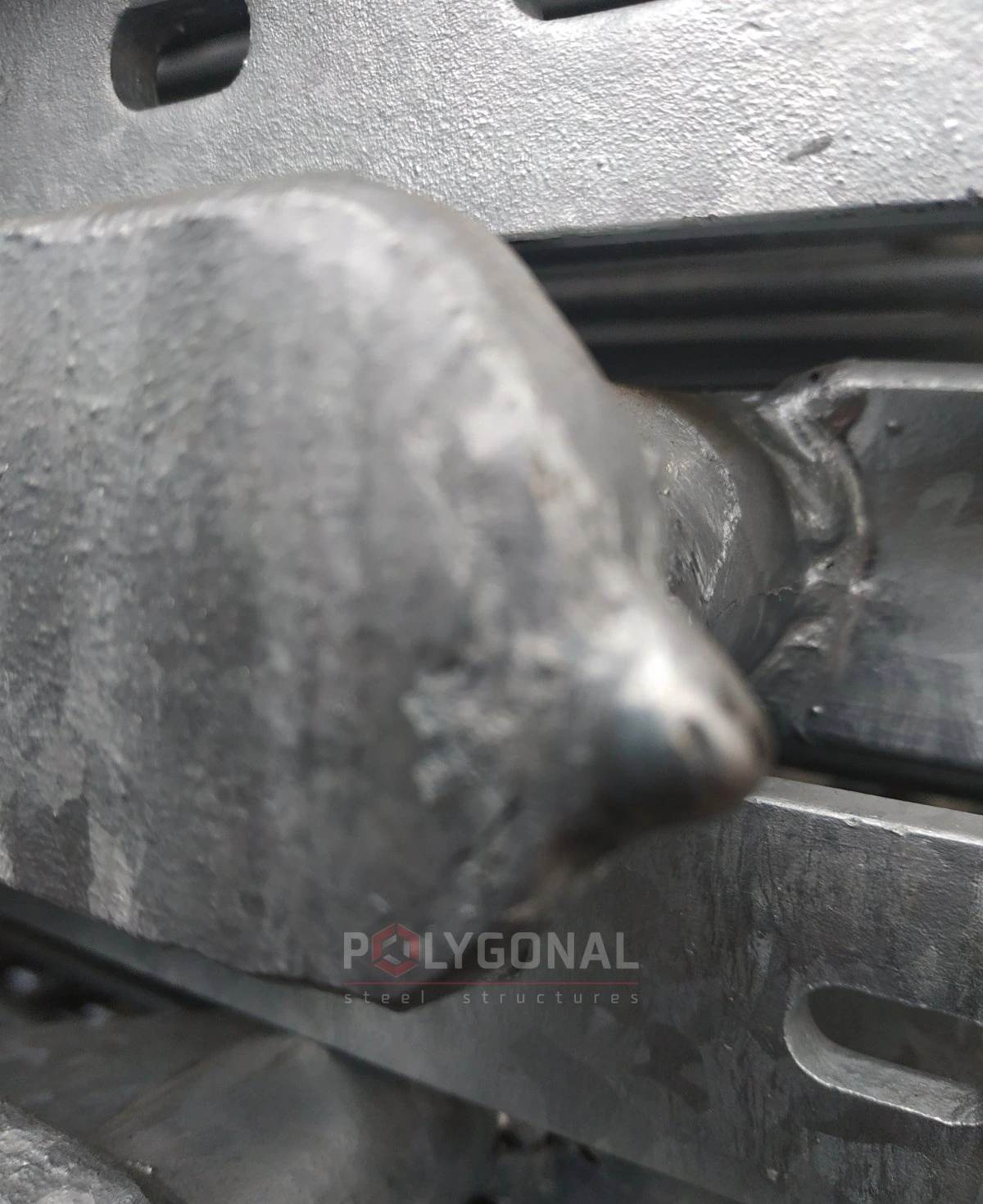
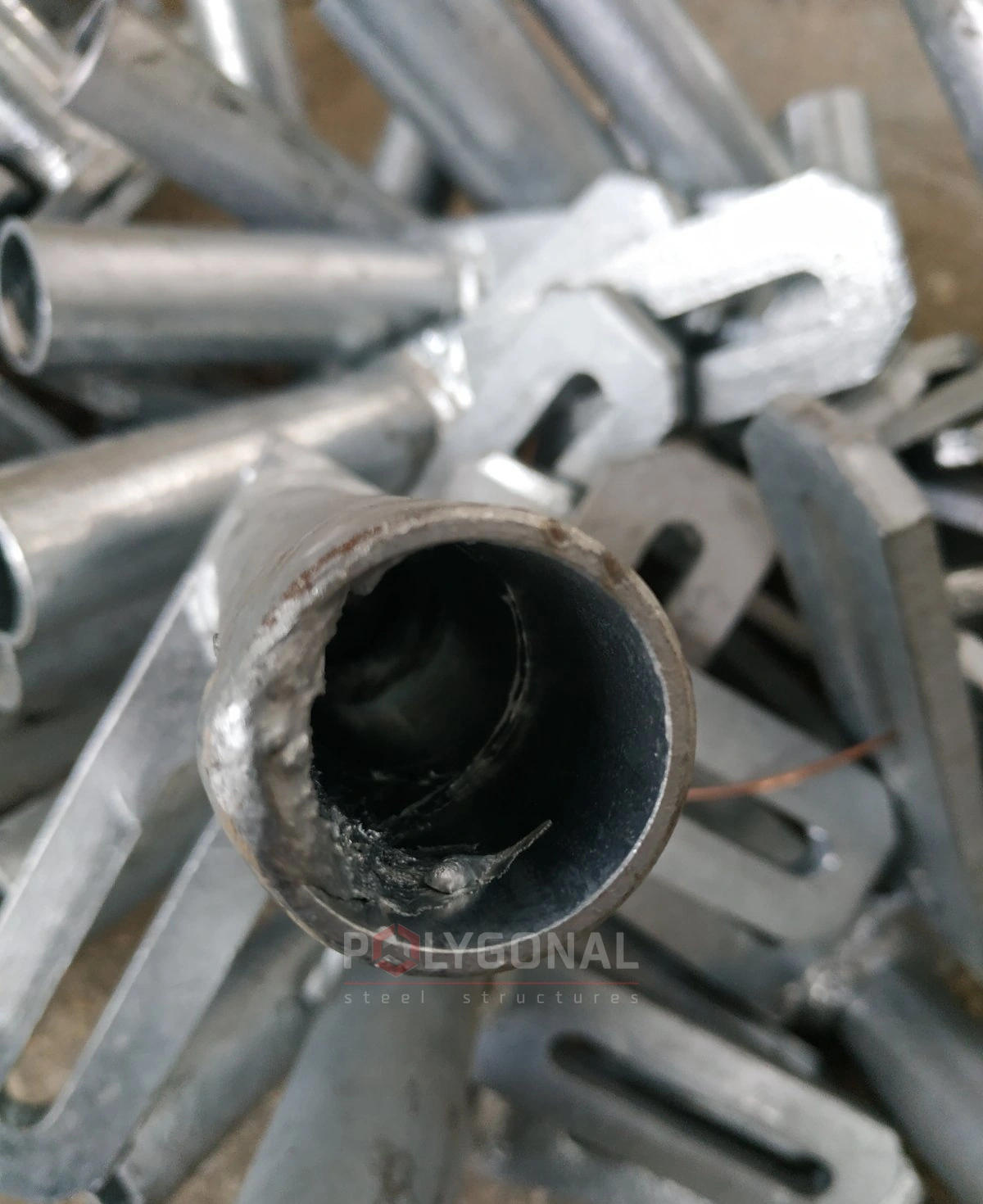
A separate group consists of defects linked to surface preparation and bath conditions. They are described in Zinc Coating Defects: Runs, Grey Coating, Detachment and Black Spots: flat runs, drip runs (“tears”), black spots, pitting attack, blisters from pickling, hydrogen embrittlement (delayed fracture), pickling and flux residues, lumps, lead foam, discolouration of the coating, drops and drips, ash and flux residues, sticking (contact marks), imprints, grey coating, coating detachment, flaking (detachment of the top zinc layer).
Corrosion during storage and service
White rust
Signs: white or light grey layers of zinc oxides and hydroxides; if the alloy layer corrodes, a brown colour from iron hydroxide appears.
Causes: storing galvanised articles in a damp atmosphere, especially under condensation; acid vapours and salts in the moisture make it worse.
How to avoid: store in a dry, well-ventilated place; if needed the articles can be lightly oiled (this does not give full protection); avoid contact with salts.
Pitting
Signs: golden-brown attack that can reach the steel.
Causes: aggressive hygroscopic solids (such as salt) land on the coating and stay there for a long time; attack appears mostly on freshly galvanised parts before a protective layer of zinc carbonate has formed.
How to avoid: keep the parts away from such substances.
Brown discolouration
Signs: a brown colour after exposure to air; over large areas or locally along the zinc crystal boundaries.
Causes: corrosion; when the alloy layer is attacked, iron ions come out through the pores and give iron hydroxide. It depends on storage conditions, not on the galvanising process; the steel remains protected by the iron-zinc alloy.
Contamination by foreign rust
Signs: red-brown deposits on galvanised articles.
Causes: rust from ungalvanised steel articles is carried by rain or wind onto galvanised ones.
Blisters on the zinc coating
Signs: flat bulges or burst blisters at the boundary of the iron-zinc layer and the outer zinc layer.
Causes: in a wet environment corrosion of the coating produces hydrogen, which lifts the outer zinc layer. Not to be confused with pickling blisters: here signs of corrosion are present.
Updated:
Hot-dip galvanising defects: frequently asked questions
How is white rust avoided during storage?
Store galvanised articles in a dry, well-ventilated place, and avoid contact with salts; if needed the articles can be lightly oiled (this does not give full protection).
Why shouldn’t galvanised articles be stacked hot?
Because of the Kirkendall effect, the reaction between zinc and steel continues below zinc’s melting point, causing flaking (detachment of the outer zinc layer). After galvanising the article is cooled below 200 °C and is not used at high temperature.
Related products: Hot-dip galvanising
More on this topic: Hot-dip Galvanising Process: Steps and Requirements · Zinc Coating Thickness under DSTU EN ISO 1461:2024 · Zinc Coating Defects: Runs, Grey Coating, Detachment and Black Spots · Hot-dip, Electro- or Cold Galvanising: Which to Choose · How to Prepare a Steel Structure for Hot-dip Galvanising: Checklist · Designing Steel Structures for Hot-dip Galvanising: Holes, Welds, Stress
Get a quote for your requirements
Send us your requirements — we will calculate the price and lead time.