
Home / Services / Machining and tooling
Service · Tool making
Machining and tooling
We design and make die tooling, aluminium extrusion tooling, steel roll-forming rolls and parts to the customer’s drawings. We also work on individual stages of the production cycle.
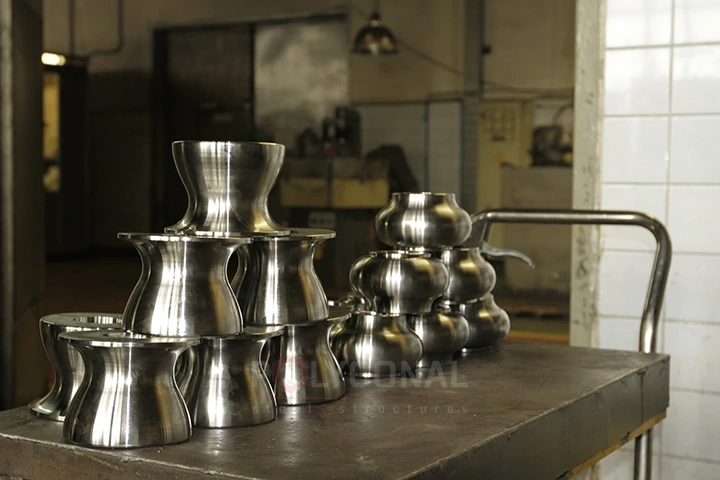
Stamps, dies and rollers
Tools and tooling for cold stamping, extrusion and roll forming, and parts to the customer’s drawings.
Dies, punches and die plates
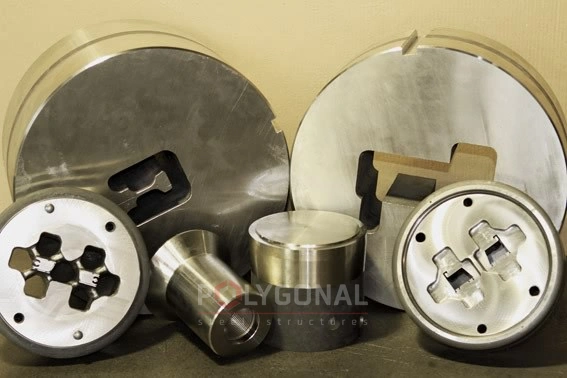
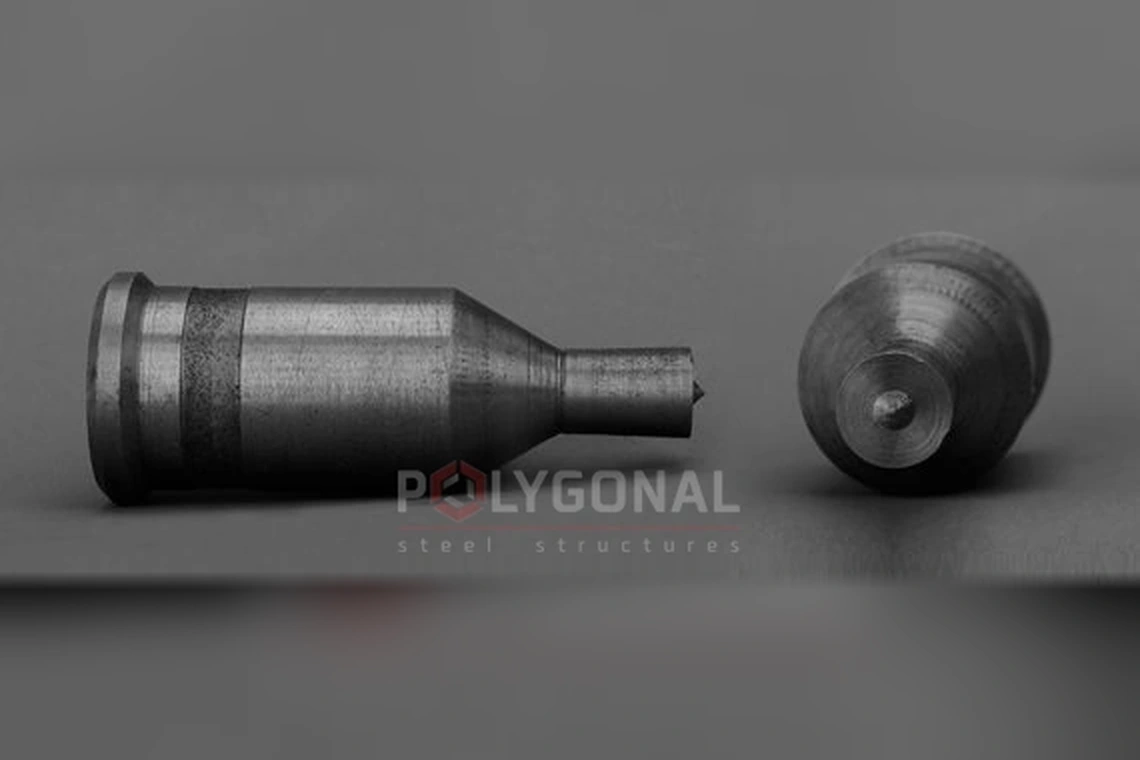
Cutting, forming and combination dies of any complexity for small- and large-batch production.
Extrusion tooling
Dies for extruding aluminium profiles of various configurations and shapes.
Roll tooling
Rolling rolls and tooling for cold roll-forming mills making open and closed steel sections.
Parts to drawings
Manufacture of components and parts to the customer’s drawings.
How we work
Full cycle
From designing the tooling in CAD to machining, heat treatment and nitriding of the tool.
CNC machines
Machines are programmed in CAM systems; machining is done on high-precision machining, EDM and grinding machines.
Quality alloy steels
Dies and rolls are made of DIN 1.2379 tool alloy steel.
Individual stages
We can cooperate not only on the whole cycle but on individual stages, for example only machining or only heat treatment.
Die block to 1000 × 650 mm
We machine die blocks up to 1000 × 650 mm in the horizontal plane.
From two weeks
Dies and rolls take from two weeks, depending on workload. Extrusion dies take 2–3 weeks from drawing approval.
Tool steel DIN 1.2379
For dies and rolls
Examples of products
Machining and tooling: technical specifications
Dies, punches and die plates
We specialise in dies for cold stamping: we design and make cutting, forming and combination dies of any complexity, and punches and die plates for small- and large-batch production. The largest die block we can machine is 1000×650 mm in the horizontal plane.
The blank material for cold-deformation dies must be hard, wear-resistant, strong and tough (to take shock loads) while not deforming plastically. All dies are made of DIN 1.2379 alloy steel, one of the best steels for cold dies, with a high chromium content. Chromium raises cutting properties and wear resistance and increases the strength of the steel, which matters especially for large punches and die plates. Compared with carbon steels, alloy tool steels have better hardenability, greater ductility when annealed, considerable strength when hardened and better cutting properties.
The lead time for tooling depends on how busy the plant is and starts from two weeks. The cost depends on the complexity of the item; we calculate it from the drawing.
Extrusion tooling
Extrusion is a complex process in which a profile of a given cross-section is formed: aluminium is pressed through a die, where it takes the required shape. The die is the tool fitted to the press that sets the configuration of the profile.
We design and make tooling for extruding aluminium profiles of various configurations and shapes. The maximum die diameter is 400 mm and the lead time from approval of drawings is 2–3 weeks. The price depends considerably on the kind of profile, open or closed. Dies are divided by complexity into categories:
- category A: for profiles of standard cross-section;
- category B: for standard profiles and profiles of medium complexity; the wall of such a product is thinner than 1.5 mm;
- category C: for profiles of higher complexity; the wall thickness of the finished profile does not exceed 1 mm.
The following data are needed to design the tooling:
- the profile (drawing);
- the press force;
- the pitch diameter of the container liner;
- how the die set is mounted in the press;
- the dimensions of the supporting tools (inserts, bolsters);
- the dimensions of the die holder;
- press-dependent die dimensions to DIN 24540, including drilled holes, keyways and marking grooves.
Roll tooling
We design and make rolling rolls and other tooling for cold roll-forming mills that make open and closed steel sections from section stock. Our production can make rolls up to 400 mm in diameter from DIN 1.2379 steel.
The price of a roll depends on the size and complexity of the item. The lead time for tooling depends on how busy the plant is and starts from two weeks.
Heat treatment of steel
Heat treatment is the classic way of improving the properties of metal. Its kinds are annealing, hardening, tempering and nitriding.
- Annealing: the main aim is a uniform structure of the steel and less ductility: the steel is heated to a set temperature, held, then cooled slowly. There is annealing of the first kind (the structure of the steel does not change; it includes recrystallisation, homogenisation and stress-relief annealing) and of the second kind (aimed at an equilibrium structure through phase transformations).
- Hardening: the aim is the most non-equilibrium structure of the alloy and an untypical level of properties; it can be with or without a polymorphic transformation.
- Tempering: reducing the internal stresses of the alloy after hardening with a polymorphic transformation.
- Nitriding: thermochemical treatment in which the metal surface is saturated with nitrogen in a special medium. The surface layer with dissolved nitrides gains higher corrosion resistance and very high microhardness: in microhardness nitriding is second only to boriding, and it exceeds carburising and carbonitriding.
Ordering a single stage
Machining or heat treatment can be ordered separately, without the full cycle. For machining, send a drawing with tolerances, the material grade and the number of parts: the tolerances decide whether CNC machining alone is enough or grinding or electrical discharge machining (EDM) is needed as well. For heat treatment, give the steel grade, the dimensions and weight of the blank and the hardness required: the heat treatment schedule depends on them.
Machining and tooling: frequently asked questions
What is the maximum size of a die block?
We can machine a die block up to 1000×650 mm in the horizontal plane.
What are the lead times for tooling?
Dies and rolls from two weeks depending on how busy the plant is; extrusion dies 2–3 weeks from approval of drawings.
What steel do you make dies and rolls from?
From DIN 1.2379 alloy tool steel, a cold-die steel with a high chromium content.
What do I need to send for a price calculation?
A drawing or sketch, the material and the number of parts; for an extrusion die, the press data and the profile (see the list above). Leave blank whatever you do not know and we will clarify.
Machining and tooling: related solutions
Need tooling or parts to a drawing?
Send a drawing or sketch. We will calculate the price and the lead time.