
Home / For Designers / Rolled Metal Handbook: Sections, Mass of 1 m, Metres per Tonne
Knowledge base
Rolled Metal Handbook: Sections, Mass of 1 m, Metres per Tonne
The handbook collects the sizes of the main rolled steel products: dimensions, cross-sectional area, mass of 1 m, metres per tonne and section properties of beams, channels, angles and tubes. Mass is given for steel with a density of 7850 kg/m³. For any other size, use the rolled metal calculator.
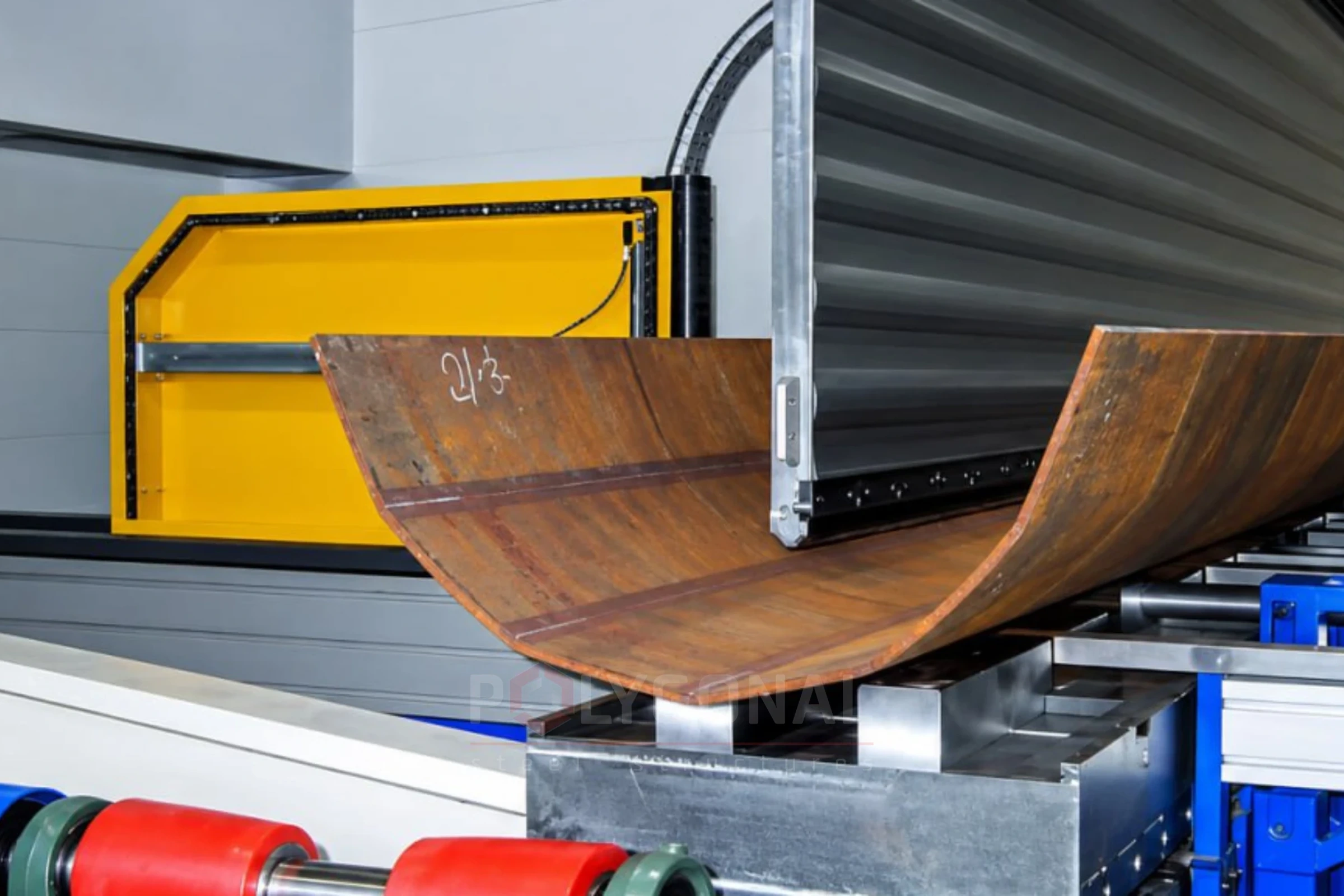
Handbook sections
Each section has a table of the standard range, an explanation of the symbols and a worked example. The tables of beams, channels, angles and tubes include the moments of inertia and resistance needed to choose a section.
I-beam Sections
I-beams No. 10–60: dimensions, mass of 1 m, moments of inertia and resistance
Rebar Sections
Rebar Ø6–80 mm: section area, mass of 1 m, metres per tonne
Round, Square and Hexagon Bar Sections
Round, square and hexagon bar: section area, mass of 1 m, metres per tonne
Sheet and Flat Bar Sections
Sheet and flat bar: mass of 1 m², sheet sizes, mass of 1 m of bar
Channel Sections
Channels No. 5–40: dimensions, mass of 1 m, section properties
Equal-leg Angle Sections
Equal-leg angles: 20–250 mm legs, mass of 1 m, section properties
Round Pipe Sections
Round pipes: mass of 1 m, water and gas pipes, section properties
Square Tube Sections
Square tubes 20×20–200×200: mass of 1 m, J, W, i
Rectangular Tube Sections
Rectangular tubes: dimensions, mass of 1 m, moments of inertia and resistance
Unequal-Leg Angles
Unequal-leg angles 25×16 to 200×125: mass of 1 m, area, radii
How to use the tables
Choose the product, find the size and read the mass of 1 m. The total mass is the mass of 1 m times the length. The “Metres per tonne” column gives the reverse: how many metres of the product make a tonne, for converting tonnes to metres and back.
For sizes that are not in the tables, open the rolled metal calculator: it works out the mass for any dimensions and adds several items into a list with a total.
The tables give the theoretical mass from nominal dimensions. The actual mass depends on the rolling tolerances, so check the supplier’s documents for accounting and ordering.
Standards of the ranges
For each product the handbook names the standard that the sizes follow.
| Product | Standard |
|---|---|
| Reinforcing steel | GOST 5781-82 |
| Round, square and hexagon bar | GOST 2590-88, GOST 2591-88, GOST 2879-88 |
| Flat bar | GOST 103-76 |
| Hot-rolled sheet | GOST 19903-74, DSTU 8540:2015 |
| Checker plate | DSTU 8783:2018 |
| I-beams | GOST 8239-89, DSTU 8768:2018 |
| Channels | GOST 8240-89, DSTU 3436-96 |
| Equal-leg angles | GOST 8509-93, DSTU 2251-2018 |
| Round and water-gas pipes | GOST 10704-91, GOST 3262-75 |
| Square and rectangular tubes | GOST 8639-82, GOST 8645-68, EN 10219 |
From the range to the product
The section is chosen in the KM calculation, and the mass of metal shows in the take-off of the KMD drawings. The POLYGONAL company prepares KM and KMD drawings and makes steel structures to the customer’s drawings, and galvanises the finished products. The mass from the tables can go straight into the galvanising cost calculator.
Updated:
Rolled metal handbook: frequently asked questions
What is a range of rolled sections?
It is the list of sizes that a standard sets for a product: cross-section dimensions, area, mass of 1 m and, for beams and tubes, section properties. It is used to choose a section and to work out the mass of a structure.
How does theoretical mass differ from actual mass?
Theoretical mass is worked out from nominal dimensions and a steel density of 7850 kg/m³. Real rolled metal has dimensional tolerances, so the actual mass differs slightly.
How do I convert tonnes to metres?
Multiply the number of tonnes by the figure in the “Metres per tonne” column, or divide 1000 kg by the mass of 1 m and multiply by the number of tonnes.
What are the moment of inertia and the section modulus for?
The moment of inertia sets the stiffness of a beam, that is, its deflection, while the section modulus is used to check bending strength. The radius of gyration is needed to check the slenderness of columns.
Related products: Custom steel fabrication · Steel structure design (structural and detail drawings) · Hot-dip galvanising
Get a quote for your requirements
Send us your requirements — we will calculate the price and lead time.