
Home / Products / Flagpoles / How to Install a Flagpole: Foundation, Anchor Cage, Assembly
Flagpoles
How to Install a Flagpole: Foundation, Anchor Cage, Assembly
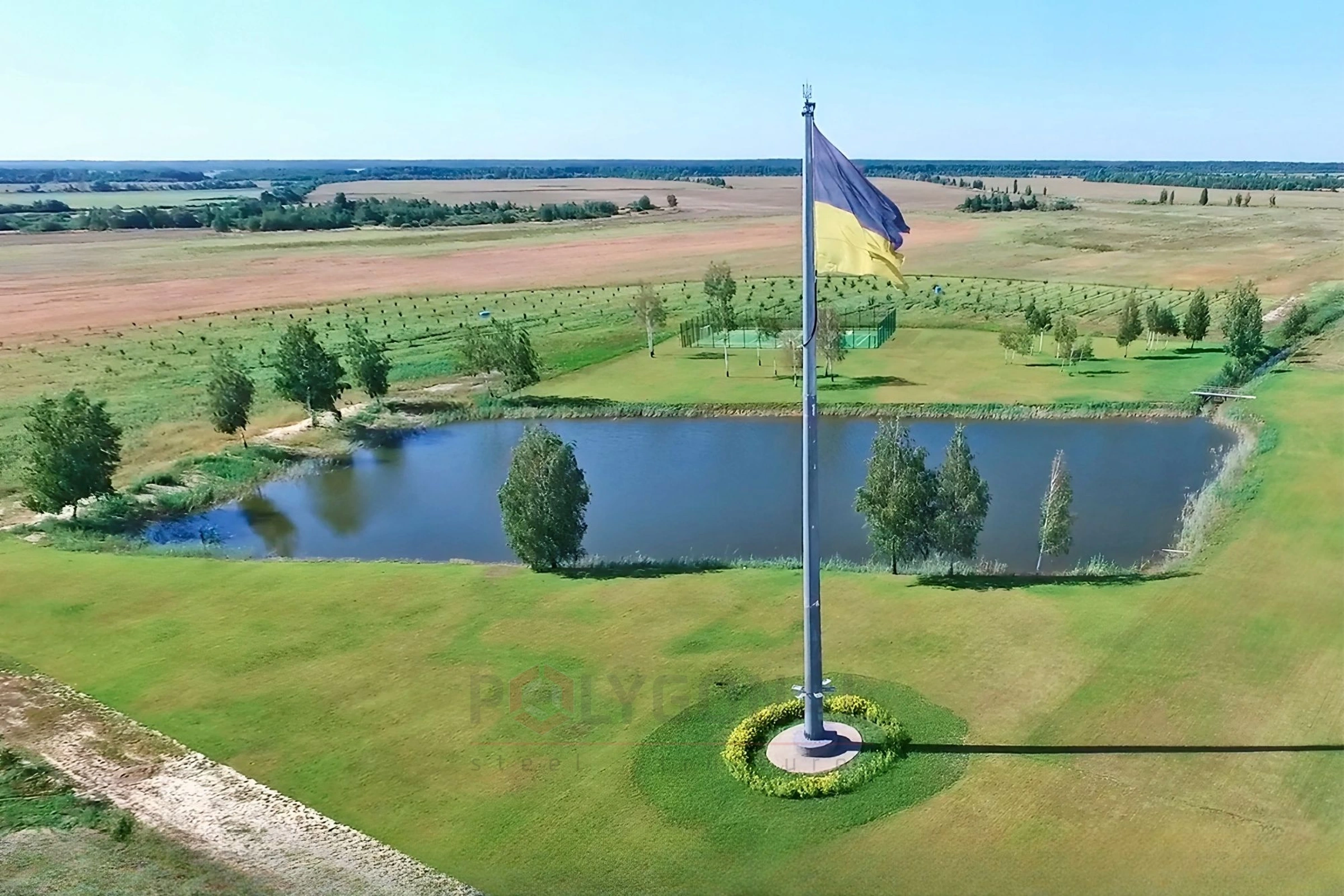
Installing a flagpole means a foundation sized for the wind load from the flag, a precise anchor cage, and assembling a multi-sided shaft by the same rules used for lighting poles and masts. Here is the process step by step.
Contents
Choosing the site and checking utilities
Before choosing a site, check the underground utilities on the plot (cables, pipes) — the foundation pit must not hit them. Position the flagpole so the flag, swinging in the wind, will not catch on buildings, trees or power lines: account for not just the pole height but also the flag length (roughly a quarter to a third of the height, see How to Choose a Flagpole) and its movement in the wind.
The flag creates a significant sail load, so the site should take into account the prevailing wind direction and the site’s wind region — this affects the shaft diameter and wall thickness, which are calculated separately for the project.
The flagpole foundation
The flagpole base is a reinforced concrete foundation with an anchor cage made of round bar (for choosing the flagpole itself, see How to Choose a Flagpole). The foundation size and depth depend on the flagpole height, the flag size (i.e. the wind load) and the bearing capacity of the soil on site — there is no universal “height to foundation size” table, since these parameters are always calculated individually for the specific project.
The foundation is designed to DBN V.2.1-10:2018, taking into account geotechnical survey results, the seismicity of the area and the loads from the specific flagpole — the same principles used for lighting pole foundations: see Lighting Pole Foundations for details.
The anchor cage and its installation
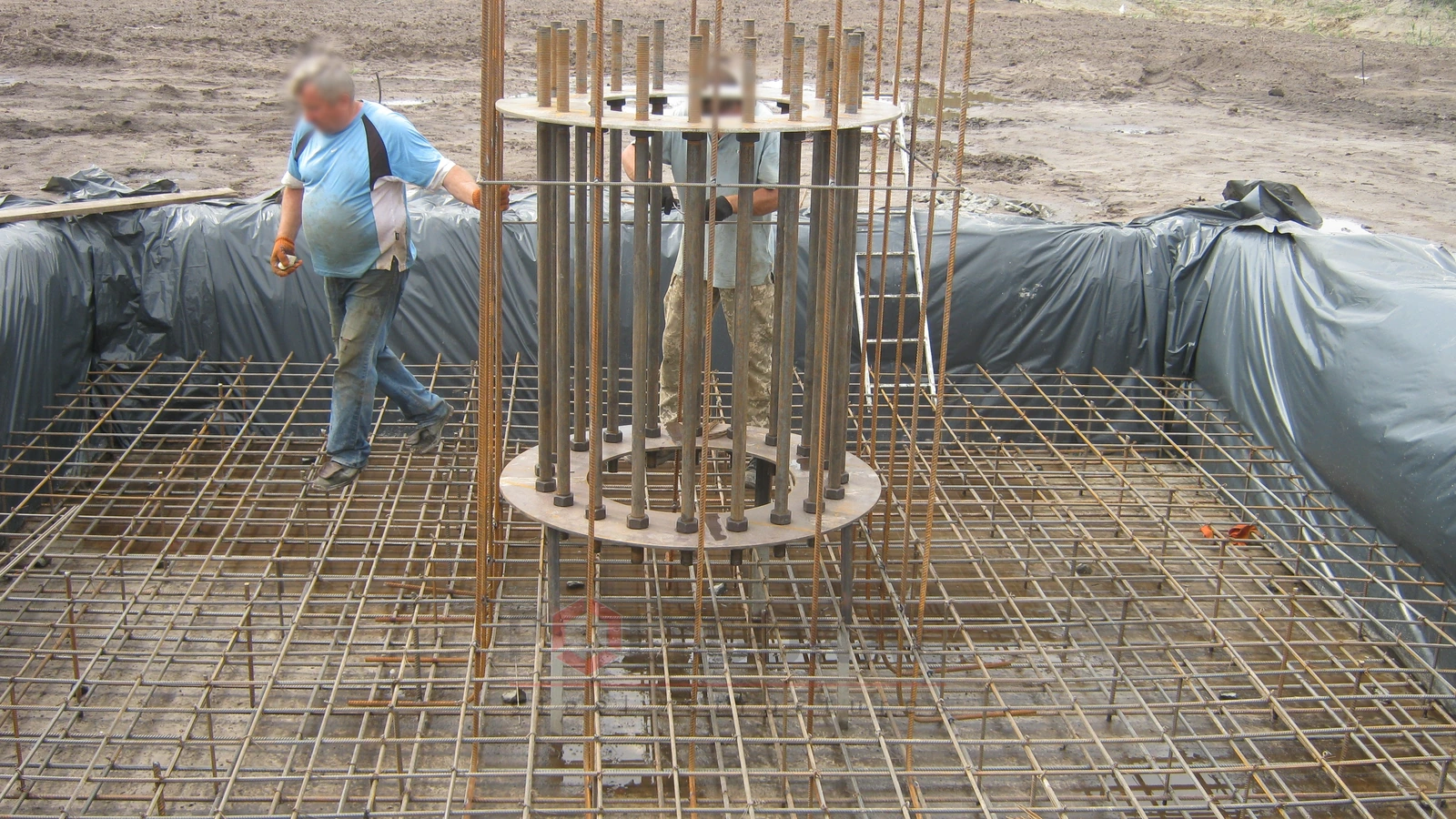
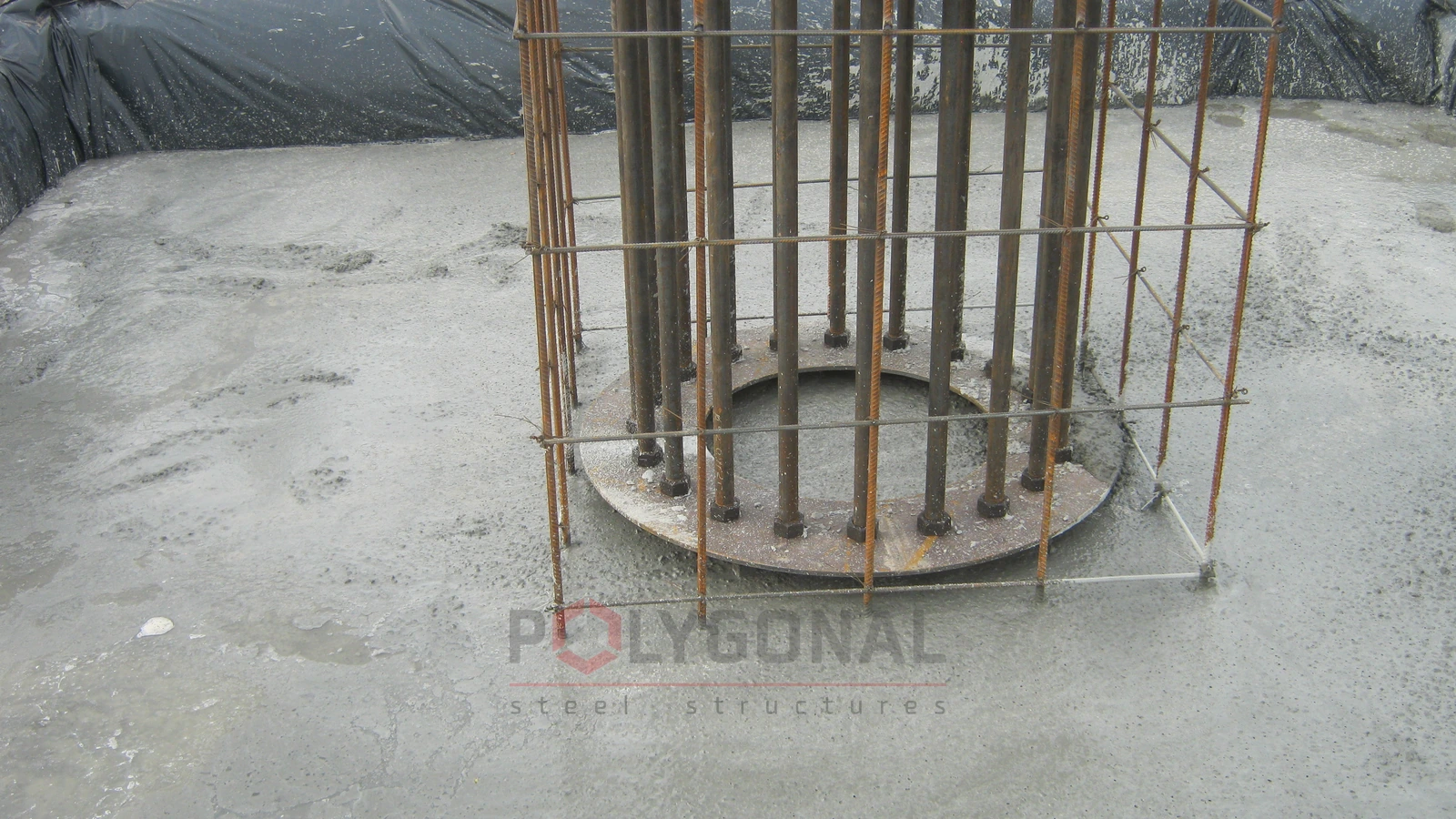
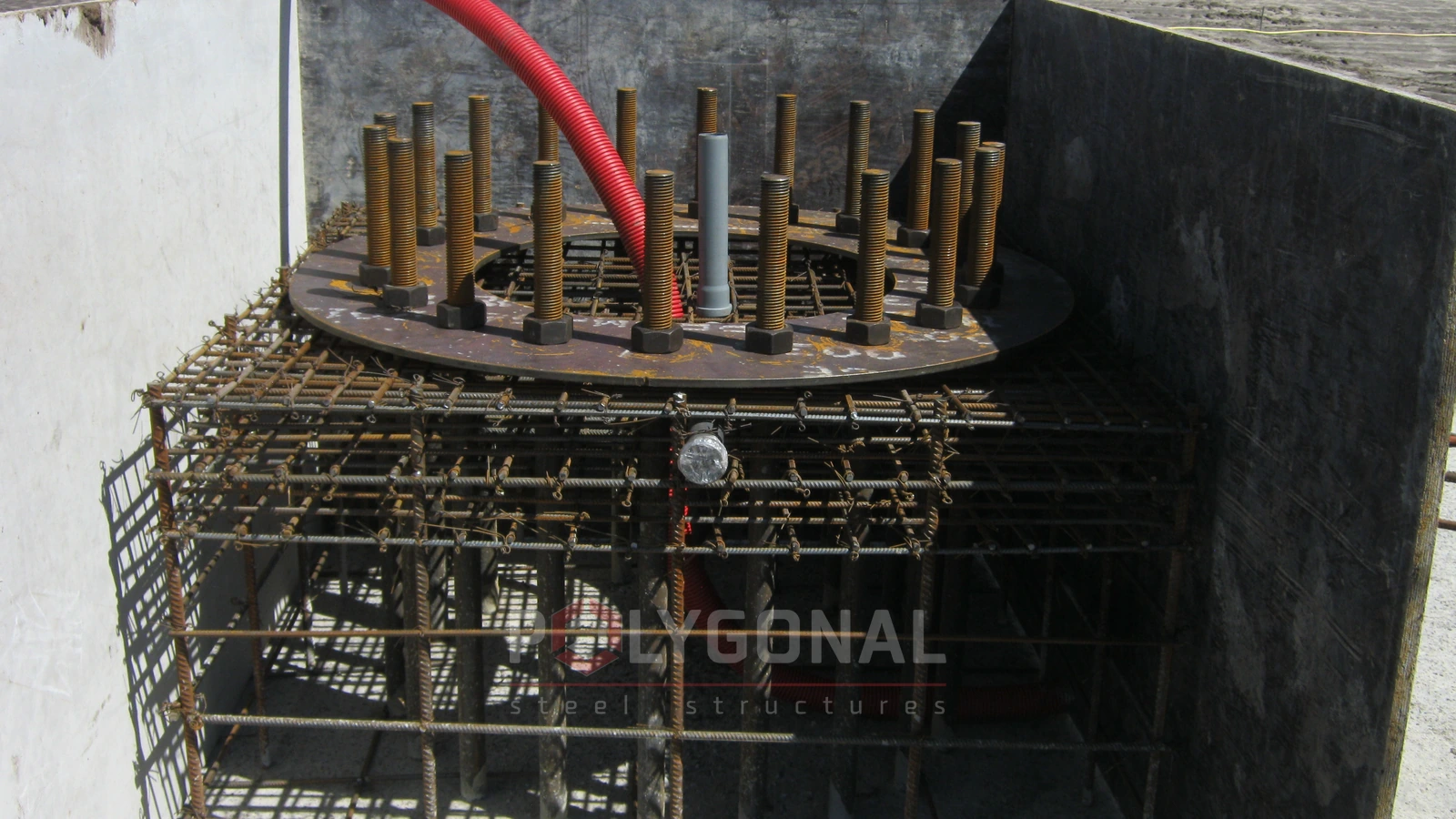
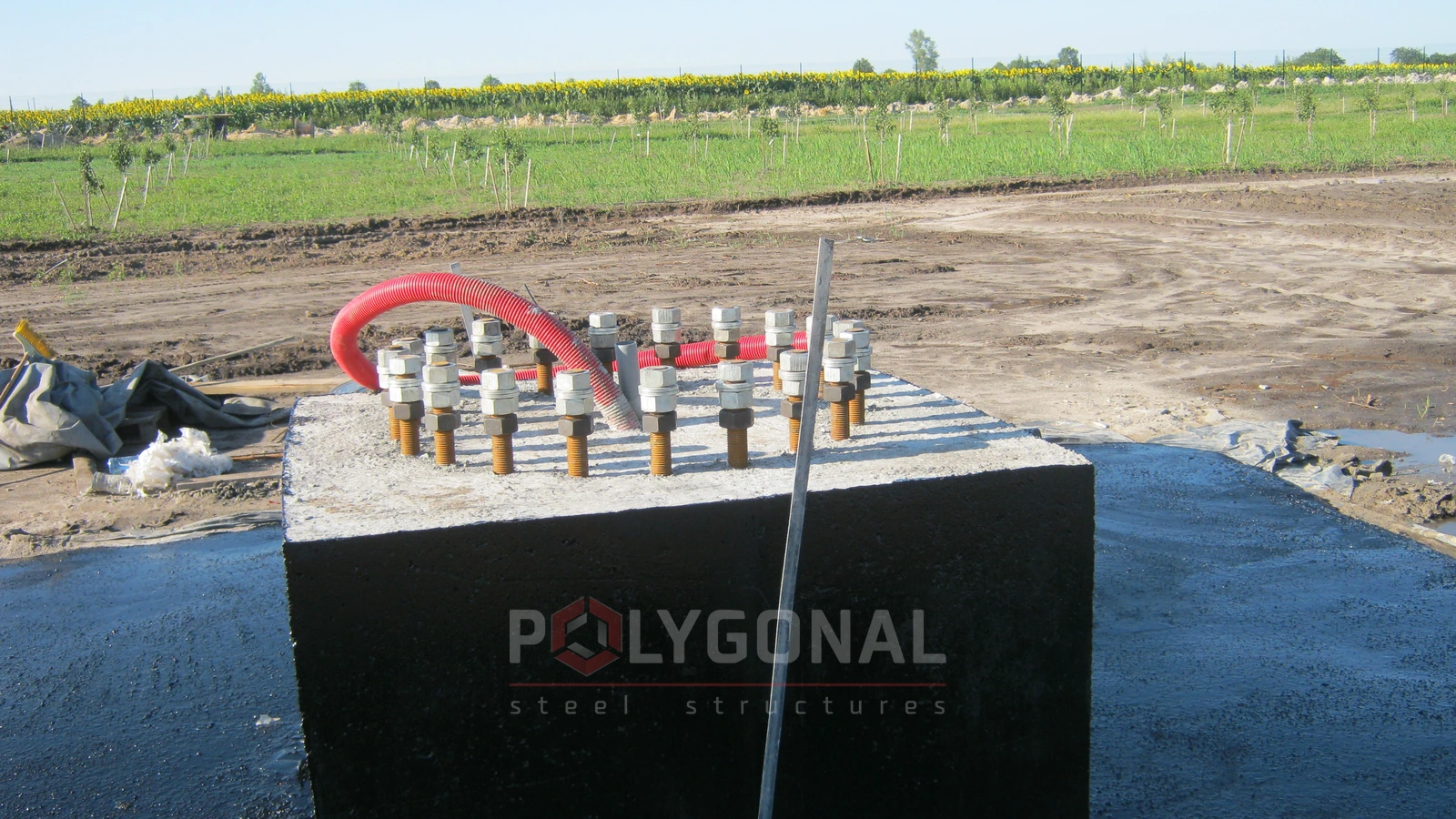
An anchor cage is a part with anchor elements that is set in the formwork and cast into the foundation together with the concrete, before the flagpole itself is installed. The cage’s anchors exactly match the holes on the shaft’s base flange, so once the foundation has reached strength the flagpole can be installed and secured with nuts without any on-site fitting.
The anchor cage is made to the specific flagpole’s design: its height, diameter and number of anchors are chosen for the load from the pole height and flag size. It is installed when the foundation is built, usually by the customer.
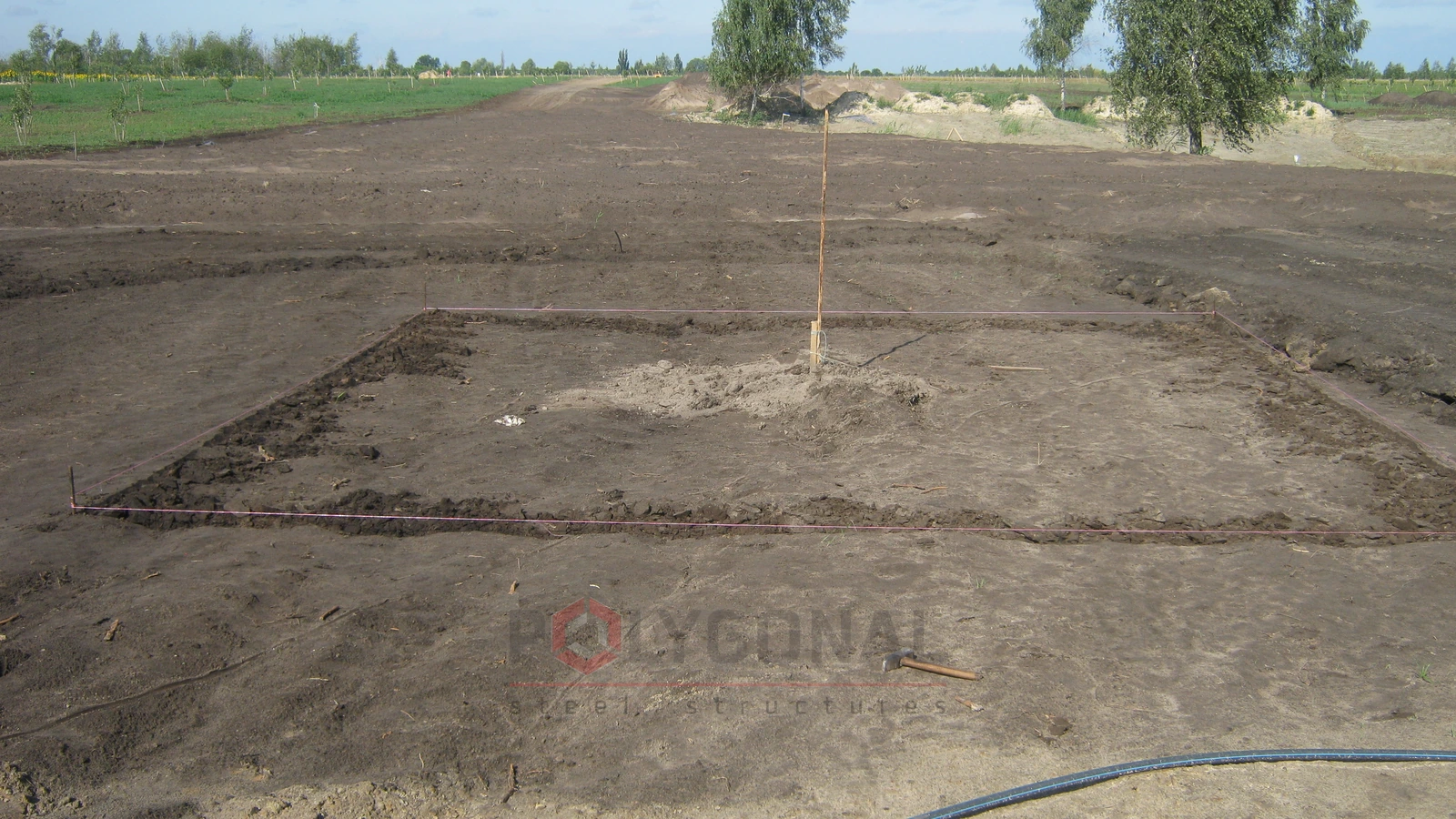
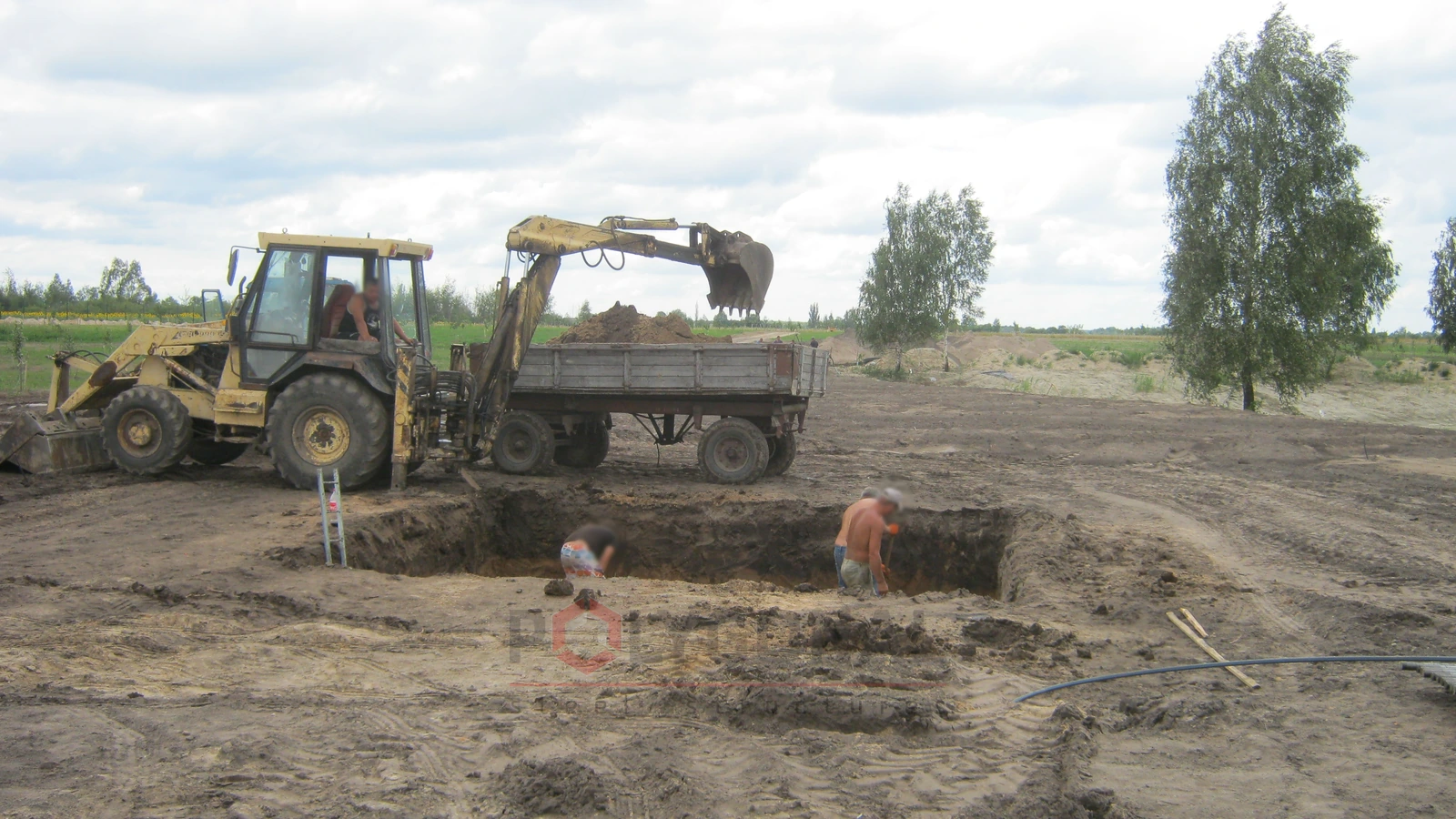
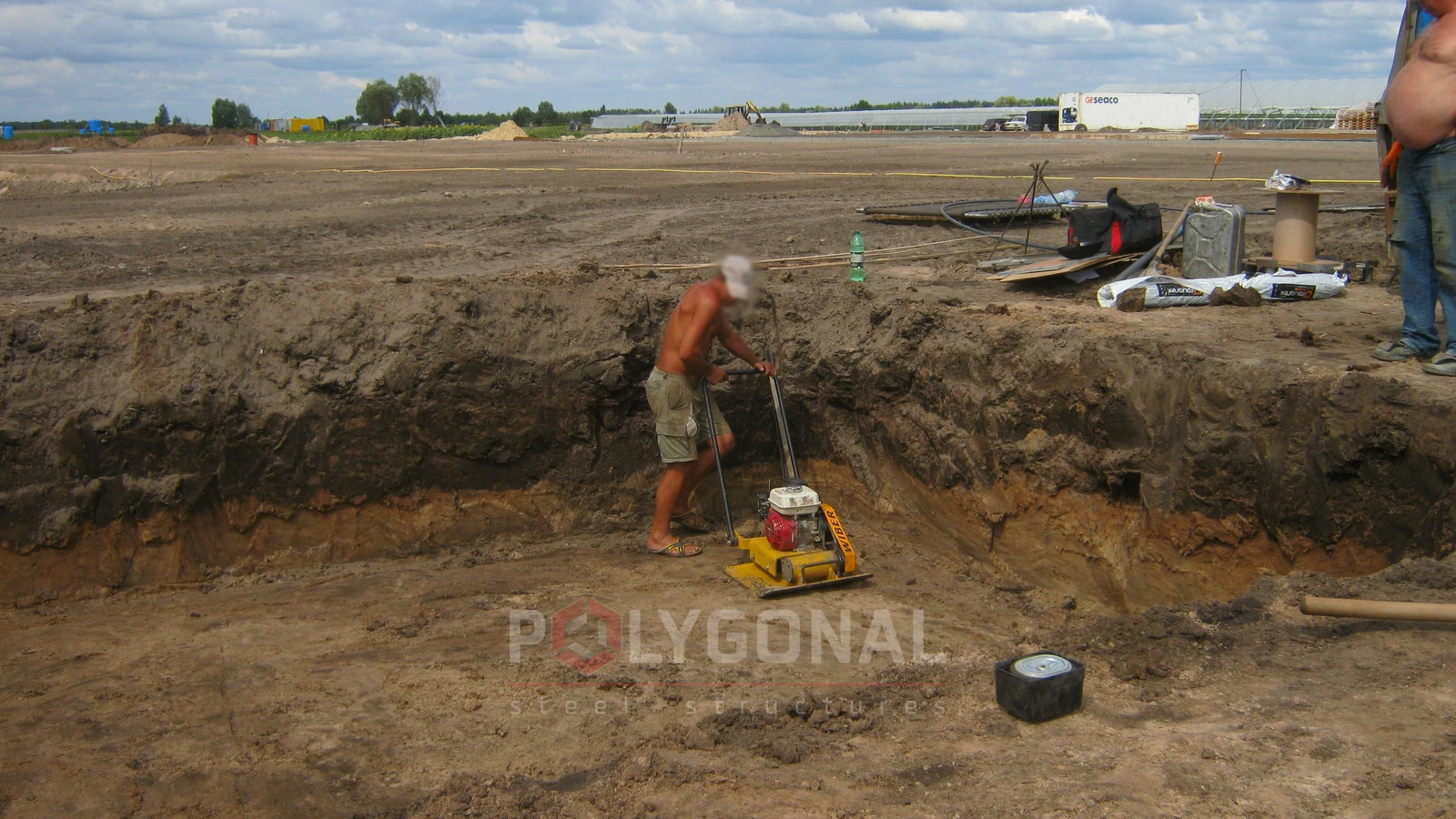
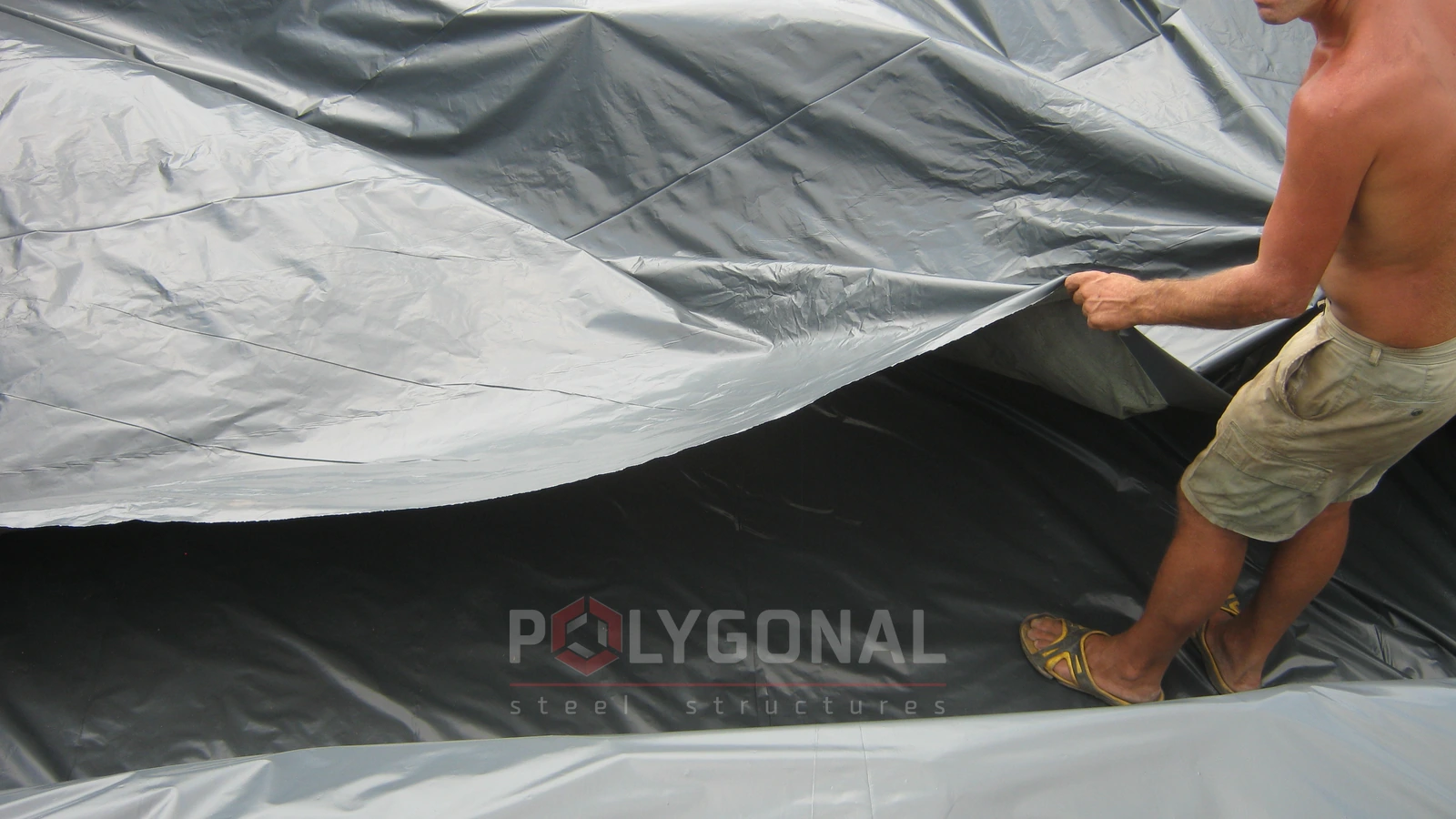
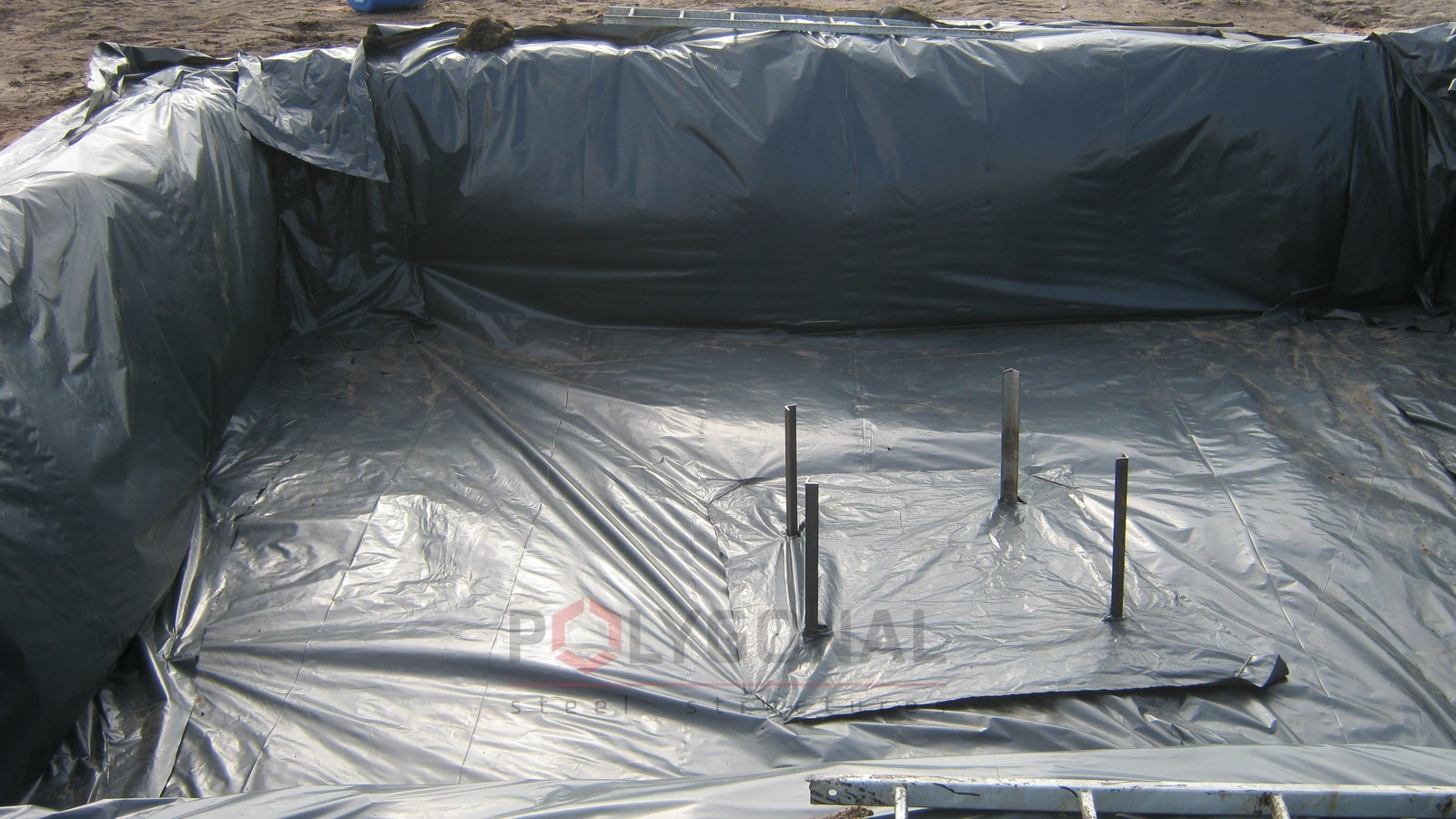
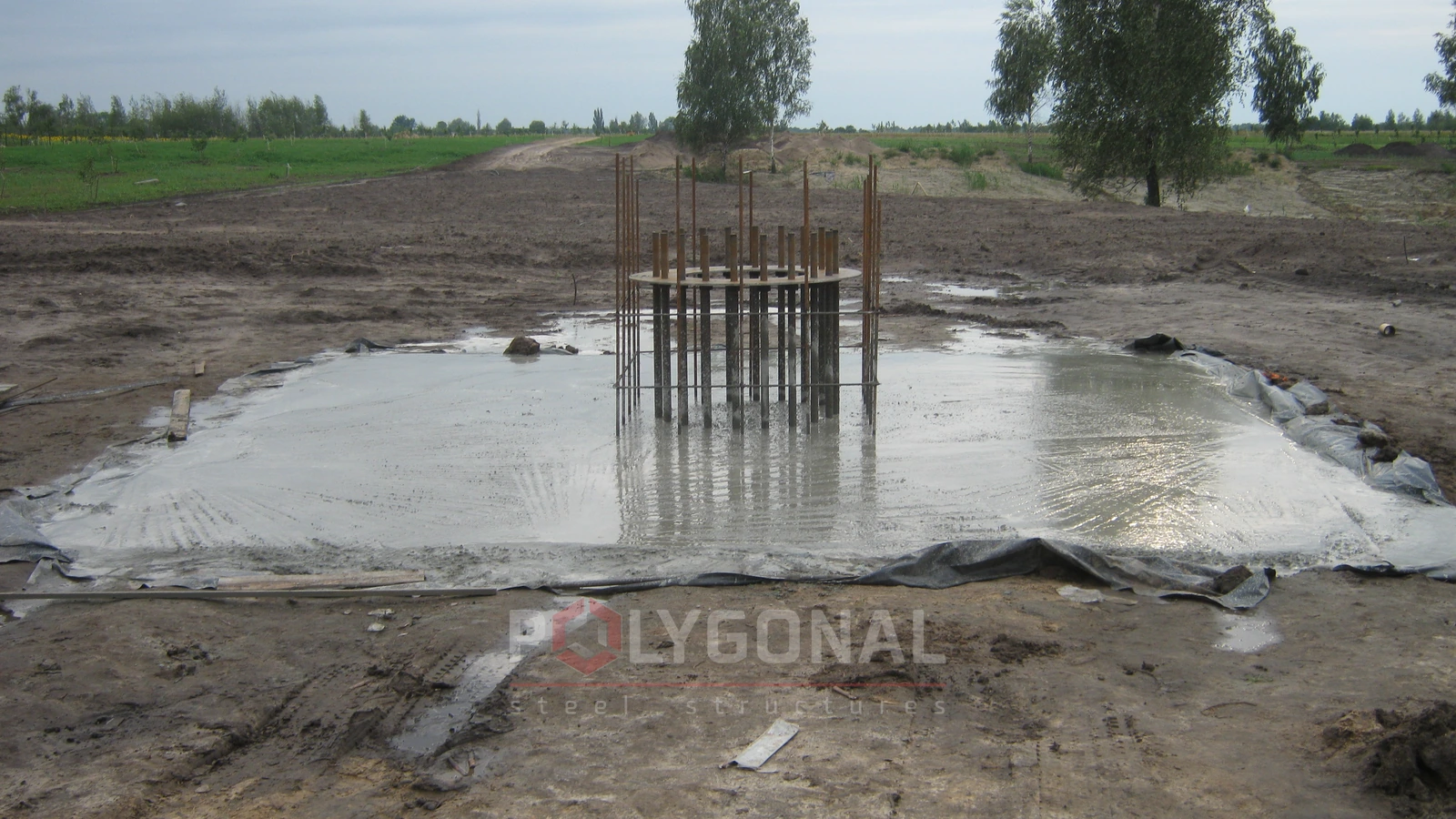
Pit and base
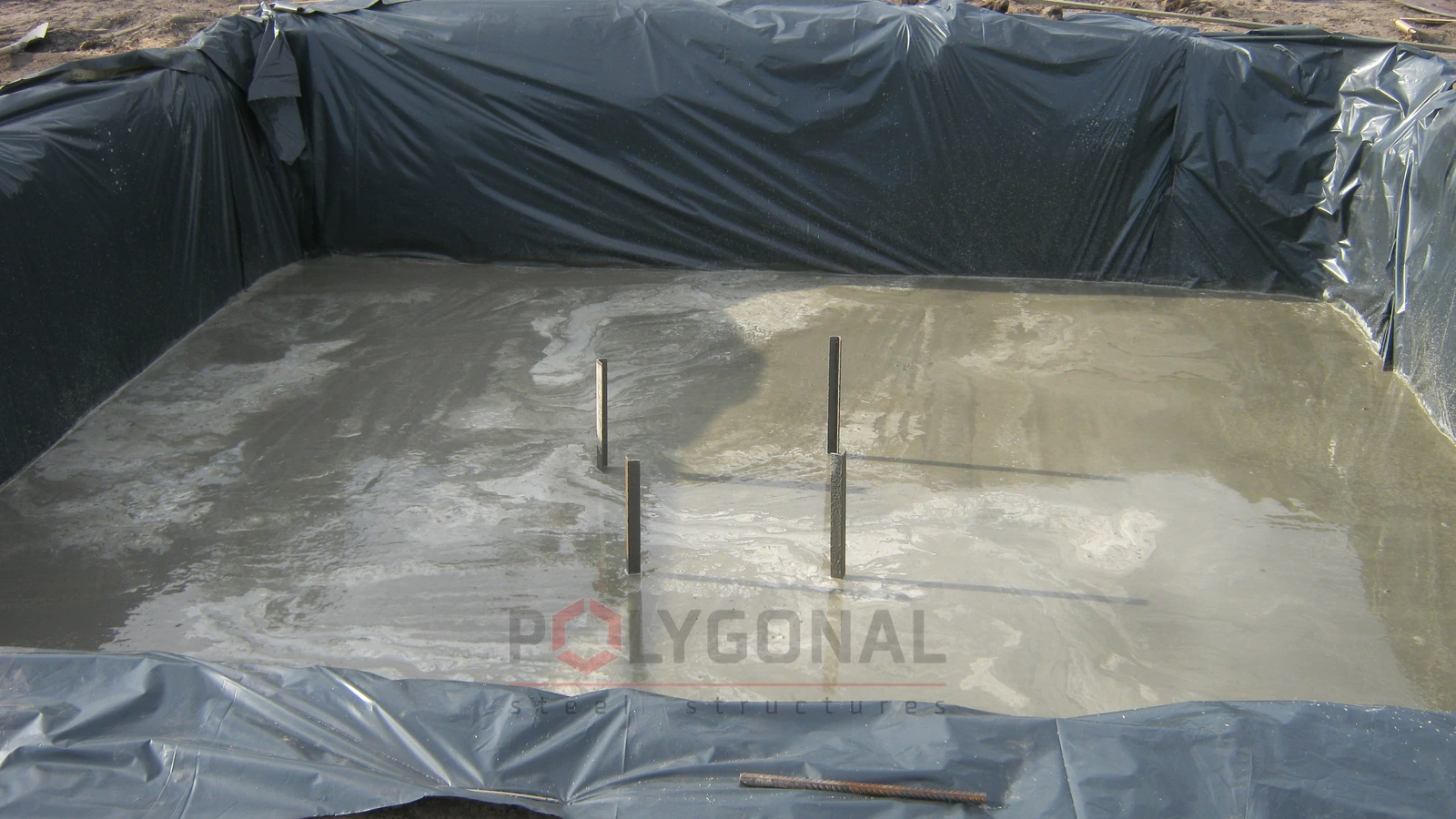
The foundation of a 30 m flagpole: marking out, digging the pit, compacting the bottom and lining it with film before pouring.
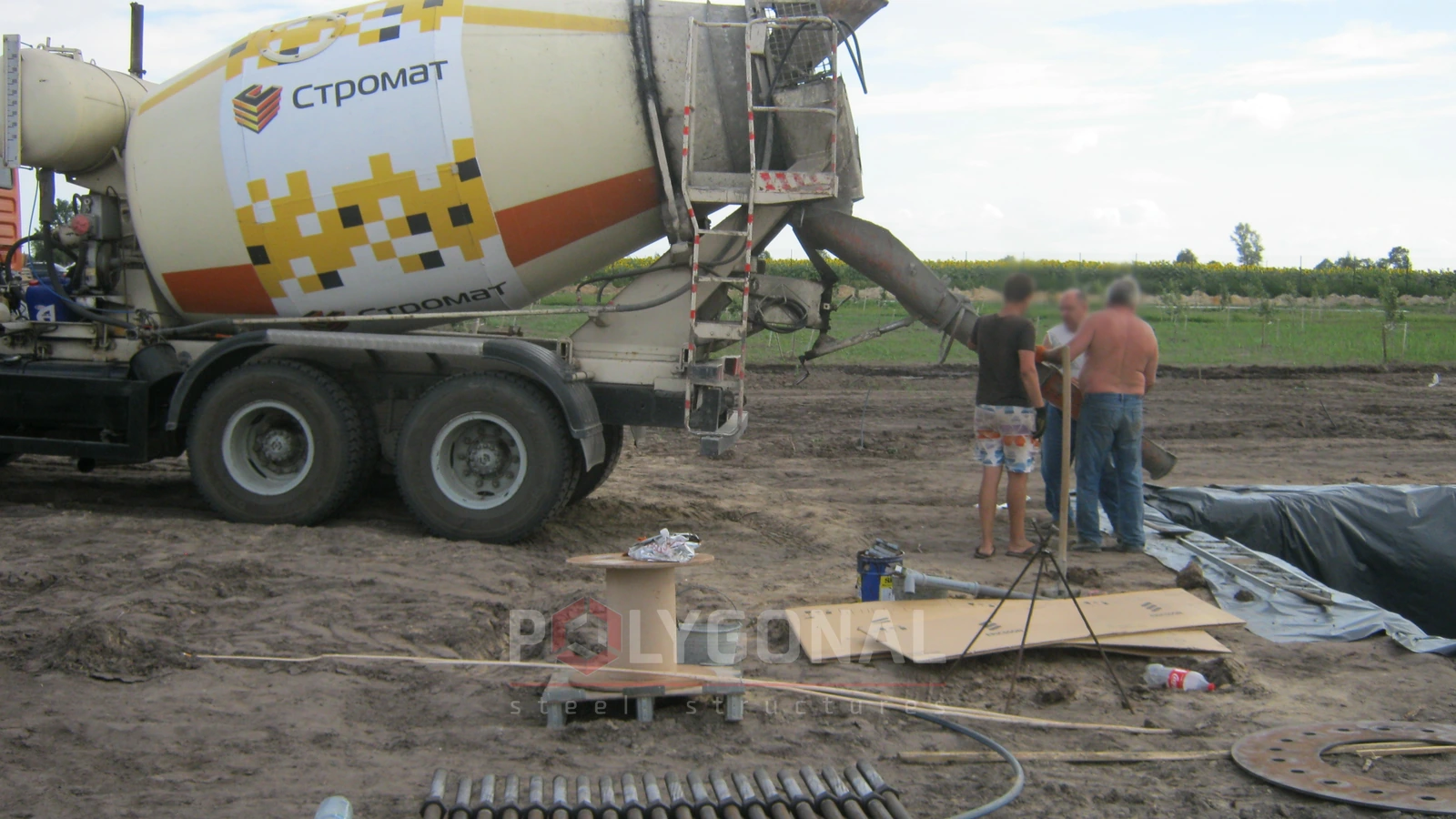
The foundation slab
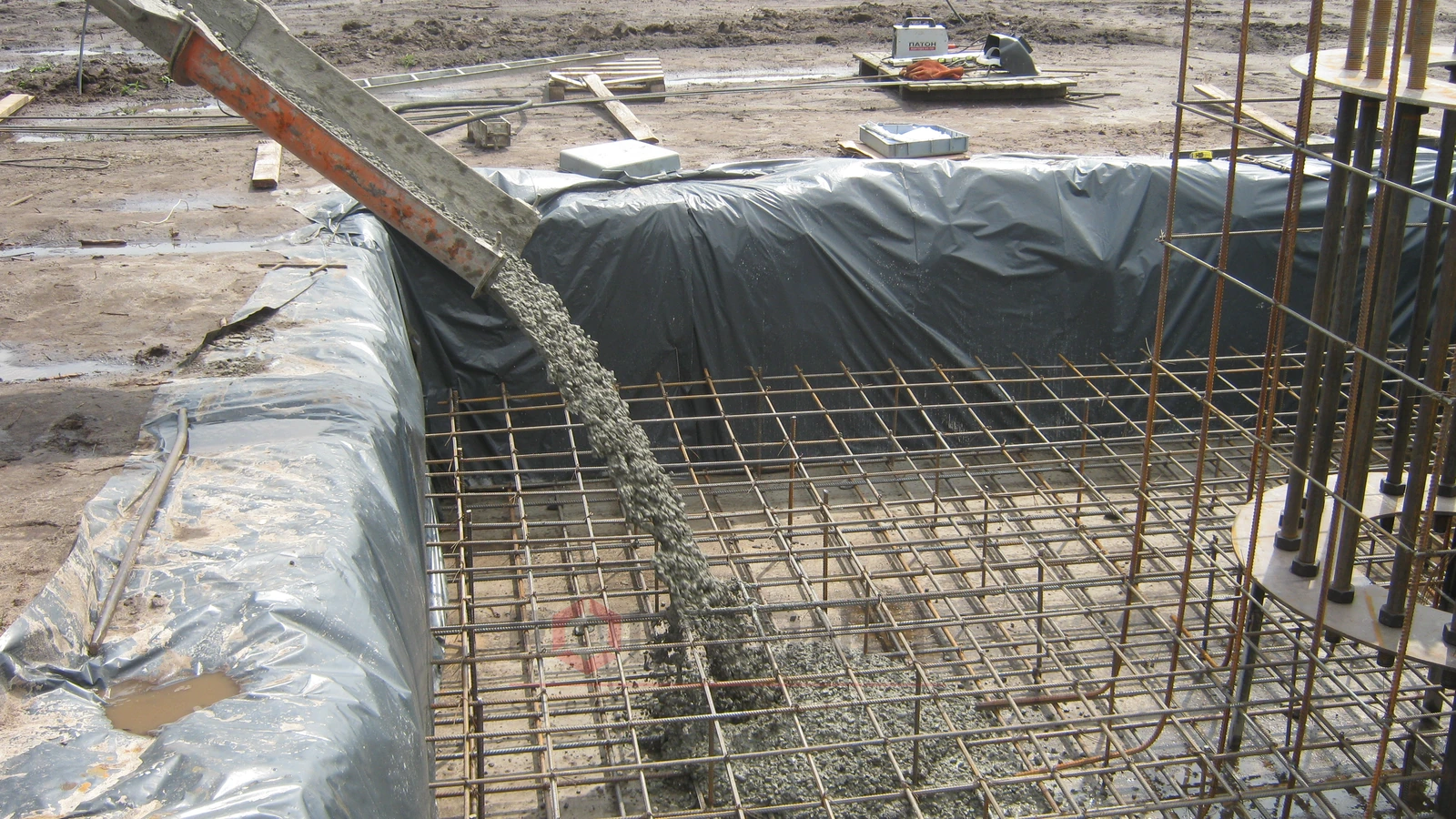
The lower slab: the first layer of concrete, the reinforcement mesh with the embedded assembly, and the pour.
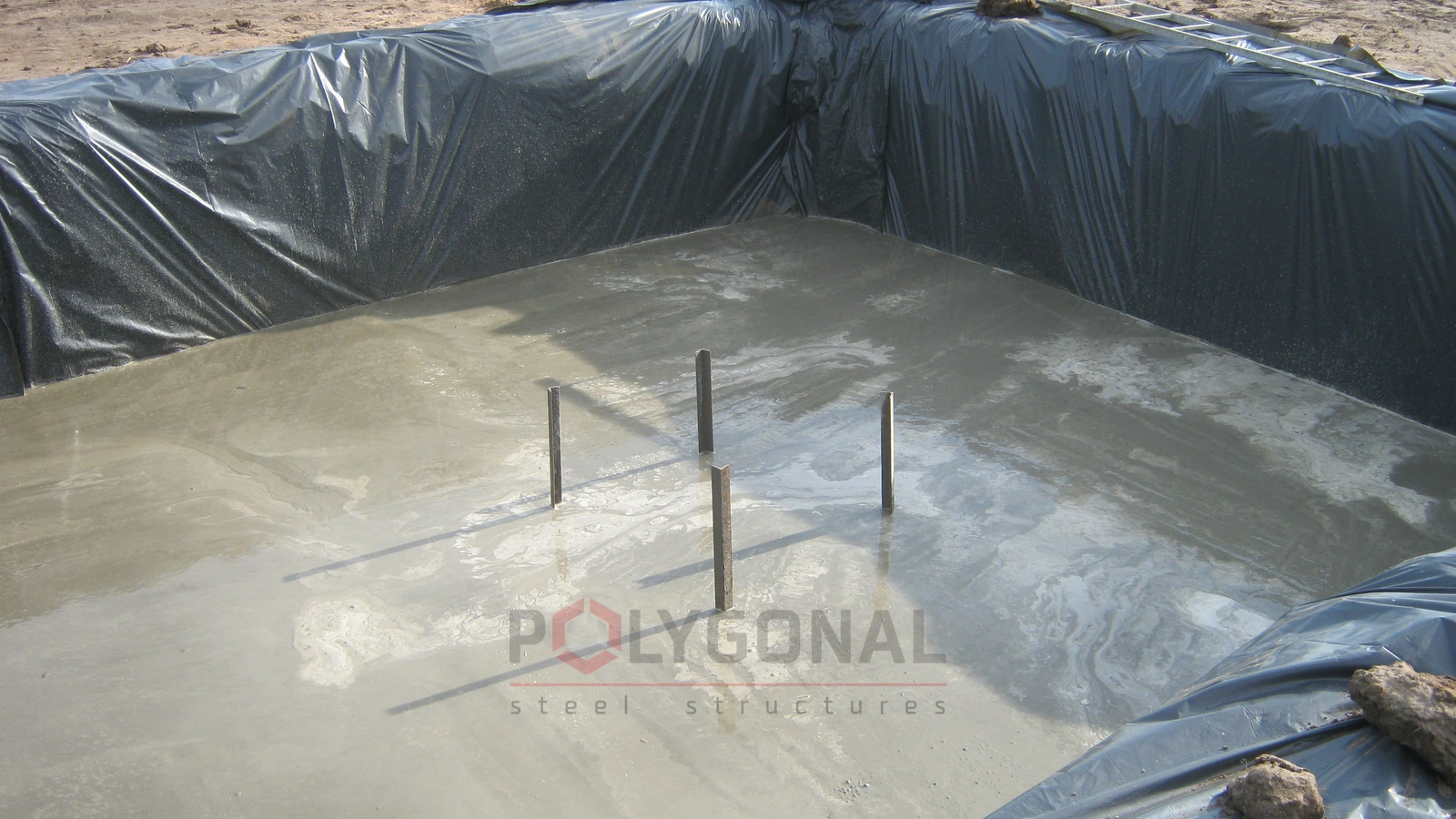
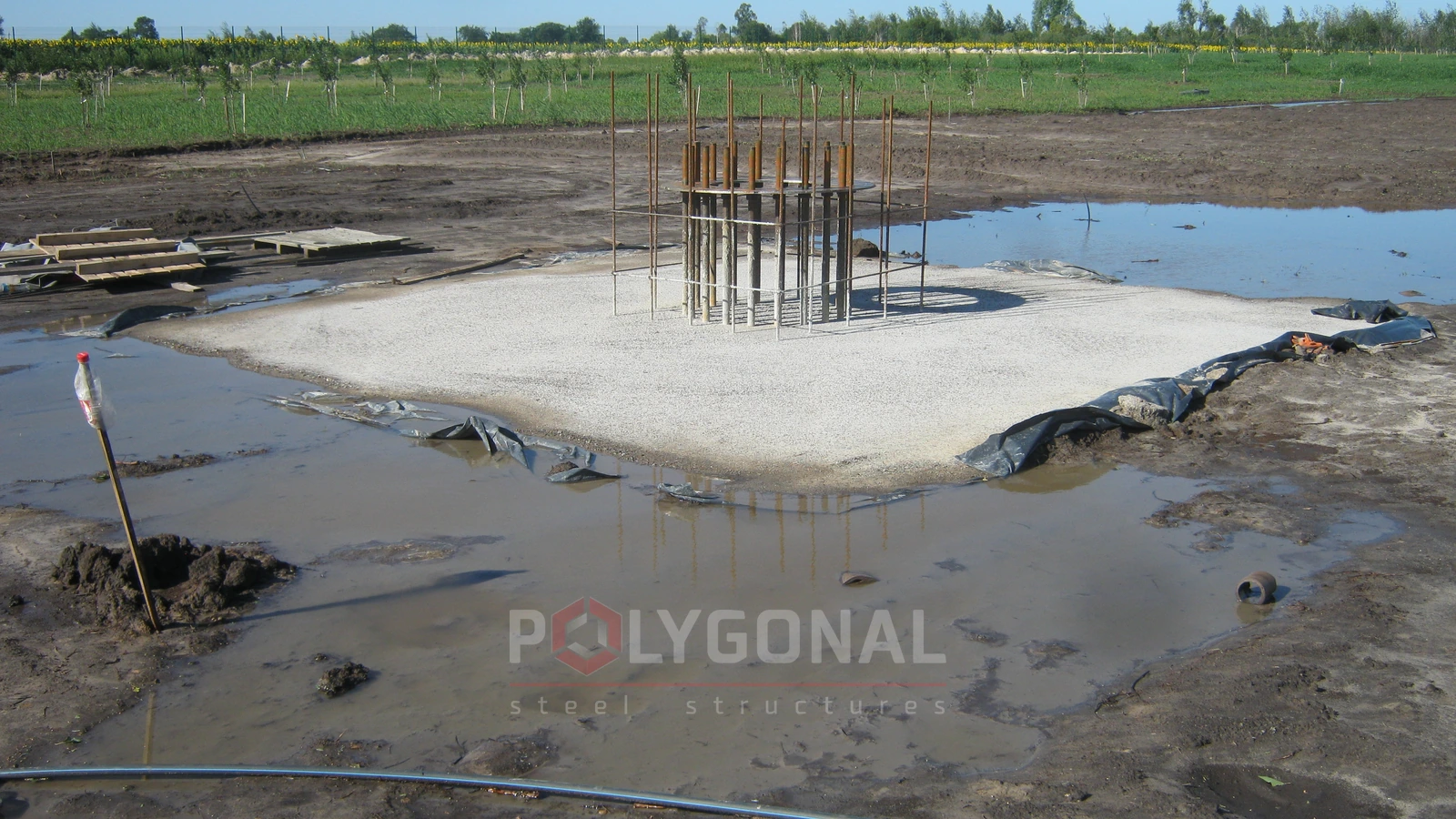
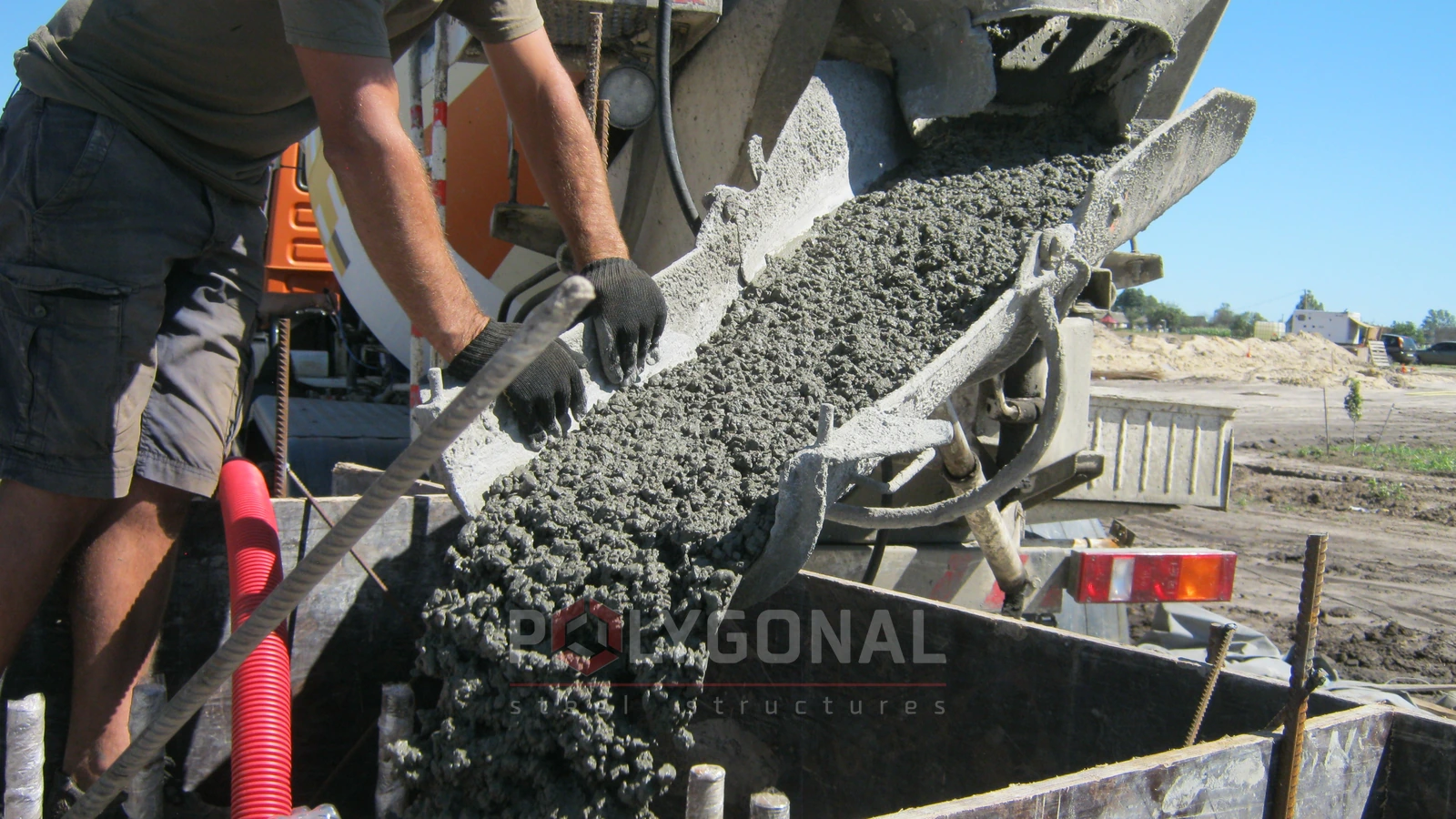
The upper part of the foundation
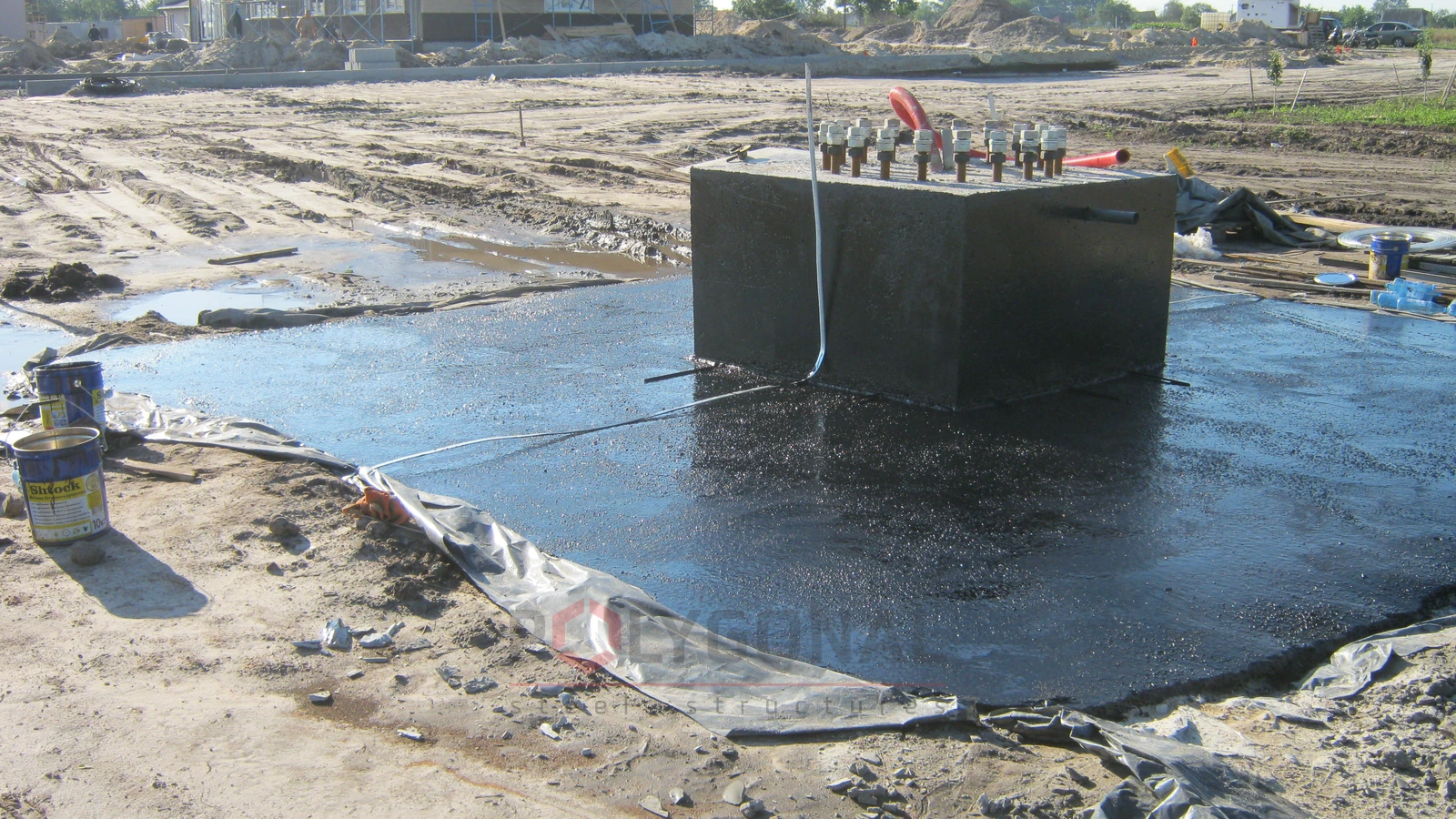
The upper part: formwork, reinforcement, the pour and the finished foundation with anchor bolts.
Step-by-step assembly
Installation is usually carried out by the customer; if needed, we arrange installation by a partner. The assembly sequence for a flagpole’s multi-sided shaft is the same as for lighting poles and masts — the full technical description is in Assembly, Erection and Installation of Multi-sided Poles, Masts and Towers. The main steps:
- the foundation must reach at least 50% of its design strength before the flagpole is installed;
- a tall flagpole is usually assembled from sections on the ground (telescopic or flanged joints) and lifted into position by a crane or an aerial platform;
- textile strap slings or steel cables in rubber sleeves are used for lifting — a bare steel cable can damage the zinc coating;
- for tall, heavy flagpoles the slings must be rated for at least 7 t and attached at least 1 m above the centre of gravity using a choker hitch; a second vertical sling through the stiffener holes on the lower section’s base flange keeps the telescopic joints from sliding apart during the lift;
- the shaft is set onto the anchor cage’s bolts, aligning the reference mark on the base flange with the mark on the anchor cage, checked for vertical alignment and secured with nuts; the slings are removed only after all the foundation nuts are fully tightened;
- mounting bolts are tightened to at least 15 kgf·m, and a lock nut secures the anchor nuts;
- a week after installation the nuts should be re-tightened to compensate for the settling of the zinc coating, after which a protective cap is fitted to the pole;
- a grounding conductor is connected to the pole; if the flagpole doubles as an air-termination, it becomes part of the lightning protection system (see the section below and Lightning Protection Masts and Air Terminations).
The customer should keep technical oversight of the installation: checking the foundation work, the accuracy of the assembly, how securely the anchor nuts are fixed, and that the zinc coating is undamaged.
Raising the flag and maintenance
Once the shaft is up, the lifting mechanism is installed and checked — manual (a winch or halyard inside the shaft) or electric, depending on what was chosen. The upper section of a “spinning” flagpole rotates on ball bearings, so the flag does not wrap around the shaft in the wind.
Flagpoles with an electric drive and an inspection hatch should be serviced on a schedule: every 3 months, inspect the electrical panel’s contacts and the bolted connections through the hatch; at least once a year, a fuller preventive check — cable tension and condition, partially lowering the flag chain to check its fittings, and testing the insulation resistance of the live parts (at least 0.5 MΩ). Any damaged zinc coating is touched up right away with a zinc-rich paint.
Simple flagpoles without an electric drive should be inspected at least once a year and after strong winds: check the tightness of the nuts, the condition of the cable or halyard, the operation of the lifting mechanism, and the illumination fixings if fitted.
If the flagpole stands on uneven ground, arrange drainage away from the base and regularly check that condensate drains from the base assembly; tall vegetation within 3 m of the pole should be cleared. The flag must be lowered or removed during a storm warning — see also How to Choose a Flagpole.
Common mistakes when installing a flagpole
- removing the slings before all the foundation nuts are fully tightened;
- insufficient foundation strength at the time of installation (less than 50% of design strength);
- using a bare steel cable for slinging — it damages the zinc coating;
- skipping the re-tightening of the nuts a week after installation;
- choosing a site without accounting for the flag’s swing in the wind relative to buildings, trees and power lines;
- grounding and lightning protection for a tall free-standing flagpole left out of the design.
A flagpole and lightning protection: what the design decides
A flagpole is often the highest point on a site, but unless the licensing authority, the insurer or the customer requires protection, a risk assessment under EN 62305-2 decides whether it is needed (informative Annex E to DSTU EN 62305-3:2021, cl. E.4.2.1), not height alone.
A steel flagpole can be treated as a natural air-termination by analogy with DSTU EN 62305-3:2021 (cl. 5.1.3 and 5.2.5, Table 3) if:
- it stays permanently in place and contact between its parts is reliable (welding, bolts; cl. 5.5.3);
- the wall meets the minimum in Table 3: 4 mm for steel (stainless or galvanised), and 0.5 mm only for sheet cladding where puncture, local overheating or ignition does not matter;
- the metal is not insulated (a thin coat of paint or 0.5 mm of PVC does not count as insulation).
Clause 5.2.5 has no rule for a multi-sided shaft as such: it covers sheet metal and metal pipes and parts on a roof (for pipes and parts, cl. 5.2.5 c, d adds a cross-section condition: not less than for standard elements, Table 6), so for a flagpole the conclusion is up to the design.
The flagpole is then part of the lightning protection system (LPS) and needs a down-conductor, an earth-termination and a test joint (cl. 5.3.6; natural down-conductors connected to foundation earth electrodes do not need one). The shaft itself can be the down-conductor if its joints are reliable (on a flagpole made of sections, mainly the section joints) and its cross-section meets Table 6 (cl. 5.3.5). The flagpole can be electrically separated from nearby metal parts of a building and its equipment by a separation distance (cl. 6.3.1).
At the design stage, the number and positions of flagpoles and whether they can be lowered are agreed with the builder (informative Annex E, cl. E.4.2.2.2.5).
Updated:
Installing a flagpole: frequently asked questions
What does a flagpole foundation consist of?
A reinforced concrete foundation with an anchor cage made of round bar. The exact size and depth are calculated individually for the flagpole height, the flag size (wind load) and the site soil — there is no universal table.
What torque should flagpole mounting bolts be tightened to?
At least 15 kgf·m, checked by tapping and with a feeler gauge, as with other multi-sided poles and masts. A week after installation the nuts should be re-tightened.
Can a flagpole be raised without a crane?
Short flagpoles can be installed with an aerial platform or by hand; tall flagpoles are assembled on the ground and lifted into position by a crane or an aerial platform.
How often should an installed flagpole be serviced?
Simple flagpoles without an electric drive — at least once a year and after strong winds. Flagpoles with an electric drive and an inspection hatch — every 3 months for the electrical panel and bolted connections, and a fuller annual check that includes testing the insulation resistance.
Does a flagpole need grounding?
Yes, a grounding conductor is connected to the pole as per the design. For lightning protection of a flagpole, see the section above.
When can a flagpole serve as an air-termination?
Only if the lightning protection design calls for it. Clause 5.2.5 of DSTU EN 62305-3:2021 has no direct rule for a multi-sided shaft, so by analogy with it the design checks reliable contacts, the wall (Table 3) and uninsulated metal; a down-conductor (the shaft can be one) and an earth-termination are needed as well. Connecting the shaft to the grounding alone is not lightning protection.
Related products: Flagpoles · Hot-dip galvanising · Lightning protection masts and air-termination rods
More on this topic: How to Choose a Flagpole: Height, Flag Size, Lifting Mechanism
See also: Steel mast as air-termination
Get a quote for your requirements
Send us your requirements — we will calculate the price and lead time.